MACROINVERTEBRATES.ORG
  • PROJECT
  • PEOPLE
  • PRODUCTS
  • Blog
  • Resources
    • Help
    • FAQ

Initial Research Findings & Synthesis

7/16/2019

 
By Wei Gong

During this summer, our team aims to design an educator kit for the educators to engage kids in macroinvertebrate education.  Our first step was to do research to understand the problem and identify design opportunities. Before doing field research, we generated driving questions that we wanted to answer by the end of the research phase. 


Driving questions:
  1. What are the learning goals for the students in the water quality and macroinvertebrate education?
  2. What elements form a successful and engaging macroinvertebrate educating activity?
  3. What pain points do educators have for water quality and macroinvertebrate education?
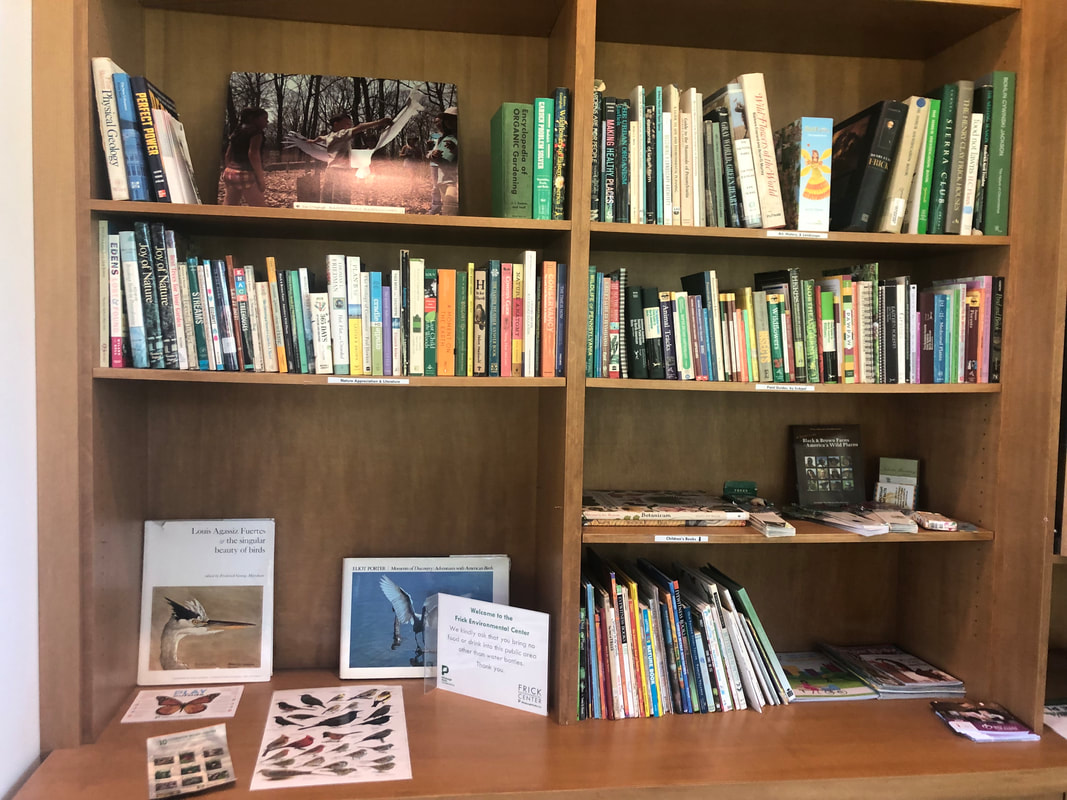
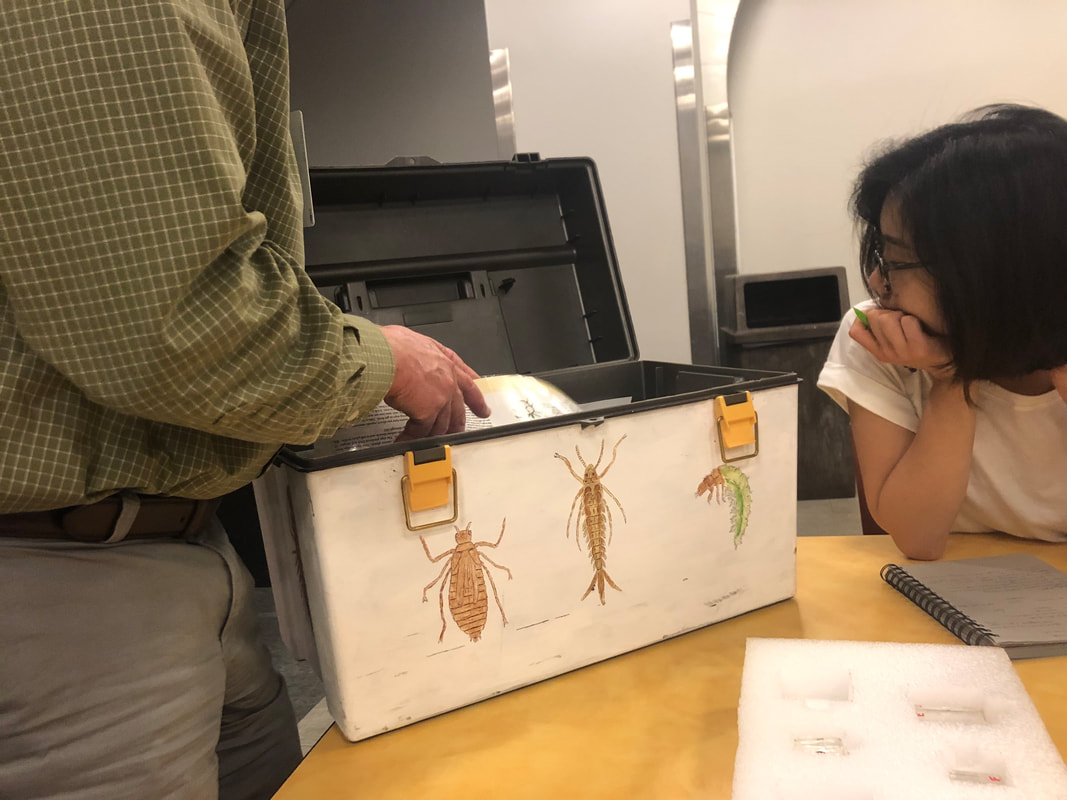
  4. What resources do educators use right now for the water quality biomonitoring activities and macroinvertebrate education? Among the resources, what works well and what doesn’t?
  5. How can technology play a role in macroinvertebrate education and what are the technological constraints in the context?

With the driving questions in mind, we conducted semi-structured interviews for the following interviewees: 
  • PatMcShea, naturalist educator in Carnegie Museum of Natural History
  • Lauren Horner, Senior Environmental Educator & Naturalist at Powdermill Nature Reserve
  • Taiji Nelsen, naturalist educator in  Pittsburgh Parks Conservancy
  • Jessica Robert, a learning scientist working on developing training tools for water quality biomonitoring activities.

After the interviews, we consolidated the data into several categories and answered the driving questions as follow: 

Question1: What are the learning goals for the students in the water quality and macroinvertebrate education? 
Based on  data we got from all the interviews, we concluded three major learning goals for the students in macroinvertebrate education as follow: 
​
​1. Learners will explore the connection between the insects and the ecosystem and have a basic awareness of
  1. The existence of insects in the stream
  2. How the insects in the stream can indicate the health of the stream
  3. How the health of the stream is affecting the insects
Quotes: 
  • Some people see stream just as water, get them to recognize stream more than just waterfall, it’s an entire ecosystem -- Taiji
  • What we want the kids to learn from the activities are: the connection between the stream’s health and the insects; ways to analyze the health of the stream; why insects are important to steam health; -- Lauren
  • Tell the kids the insects in the stream is a good thing -- Pat
2. Learners will have a basic understanding of the structure of the insects 
Quotes: 
  • We also teach kids to identify the organisms  -- Lauren
  • A supplement is to help the students notice that organisms have structures -- Taiji
3. Learners will be able to notice and explore the intrinsic value of the insects
Quotes: 
  • We want the kids to notice the intrinsic value of them, how unique each organism is -- Taiji


Question2: What elements form a successful and engaging macroinvertebrate education?
Probing into the engaging elements in the macroinvertebarete education, we got 3 insights in how to create a successful exhibit kit as follow: 
1.  Create a live experience for the learners in which they can touch, feel, and observe.
Quotes: 
  • Every kid wants to be in the water and feel it -- Taiji
  • The tactile ability is one of the key factors to engage the kid. They like being able to touch the stuff -- Lauren
  • Catching the bugs and identifying what they caught itself is exciting for the kids -- Lauren
  • We need tools with which kids will really be able to observe the insects, and really see them well -- Taiji
2.  Provide cool facts and stories about the bugs
Quotes: 
  • Kids like to learn life histories, and cool facts about the bugs -- Taiji
  • The key is to hook the students with a story -- Taiji
3.  Bring up leading questions when students are interacting with the kit ( In a facilitated exhibit)
​
Quotes: 
  • Asking  leading questions when students are interacting with the kit like “what do you think about ...etc” can help the kids engage in the activity -- Lauren


Question 3: What pain points do educators have for water quality and macroinvertebrate education?
Although under different contexts, the educators similar challenges and painpoints in the macroinvertebrate education, which we concluded as follow: 
1.  Difficulty in creating a real experience where students can touch, feel and observe clearly.
Quotes: 
  • Real things are always more captivating than images on the screens, but we don't have all the stuff in the stream. —— Taiji 
  • The images on the resources are so small and it's difficult for the students to observe. —— Taiji
2.  Difficulty in motivate students who are not interested.
Quotes: 
  • Sometimes it's difficult to engage the kids who are not interested in the bugs —— Taiji 
  • Some kids just try to identify the bugs, and when they encounter difficulties, they'll just give up. —— Lauren

Question 4: What resources do educators use right now for the water quality biomonitoring activities and macroinvertebrate education? Among the resources, what works well and what doesn’t?
Currently, educators use the resources below in macroinvertebrate education:
  • Resin & live specimen
  • Hand lens
  • Video microscope
  • Printout sheet
  • key to the orders
  • Tubs, plastics, etc for activity in a field trip

Question 5: How can technology play a role in macroinvertebrate education and what are the technological constraints in the context?
We investigated how technology is applied in macroinvertebrate education now and the potential opportunities in the future. Key findings are as follow: 

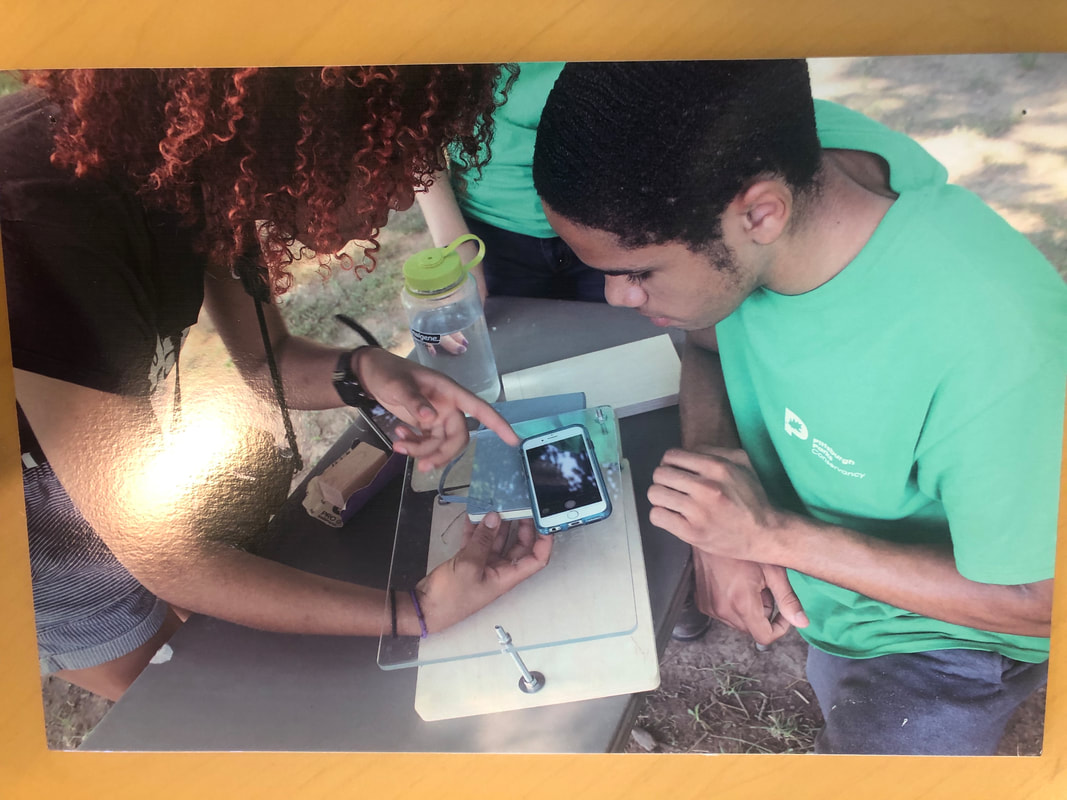
1.  Educators have concerns on students using their individual phones in camps, field trips or other similar activities.
Quotes: 
  • Cellphone is a distraction for the kids in camps. Plus, we don't always have cell serve. —— Lauren
  • Sometimes kids take pictures with their phones on field trip, but I will remind them to not break their phone. —— Lauren
  • Kids are not allowed to bring phones to the field trip. —— Taiji
2.  Usually, the camps have iPads, but several students need to share one with each other.
Quotes: 
  • Sometimes the kids work together in group to identify the insects. They usually share one ipad in in small groups —— Lauren
3.  Educators see the potential opportunities of the application of innovative technology including NFC and AR, but they are concerned about the contextual constraints like wifi and devices..

Comments are closed.

    Project Team

    An interdisciplinary team
    ​of entomologists, learning scientists, software engineers and designers collaborating to improve macroinvertebrate identification training and technologies with volunteer biomonitoring organizations.

    Categories

    All
    Broader Impacts
    By Clemson
    By CMU
    By Educators
    By Powdermill
    By Stroud
    Design Studies
    Educator Innovations
    Entomology
    Imaging
    Learning Research
    Mobile App
    NSF REU
    User Research

    Archives

    June 2023
    September 2022
    April 2022
    August 2021
    May 2021
    April 2021
    January 2021
    December 2020
    September 2020
    August 2020
    July 2020
    May 2020
    November 2019
    August 2019
    July 2019
    June 2019
    May 2019
    April 2019
    March 2019
    February 2019
    January 2019
    October 2018
    September 2018
    August 2018
    June 2018
    May 2018
    March 2018
    December 2017
    August 2017
    June 2017
    May 2017
    April 2017
    March 2017
    December 2016
    November 2016
    October 2016
    September 2016
    August 2016
    July 2016
    June 2016
    May 2016
    April 2016
    March 2016

    RSS Feed

Powered by Create your own unique website with customizable templates.
  • PROJECT
  • PEOPLE
  • PRODUCTS
  • Blog
  • Resources
    • Help
    • FAQ