
|
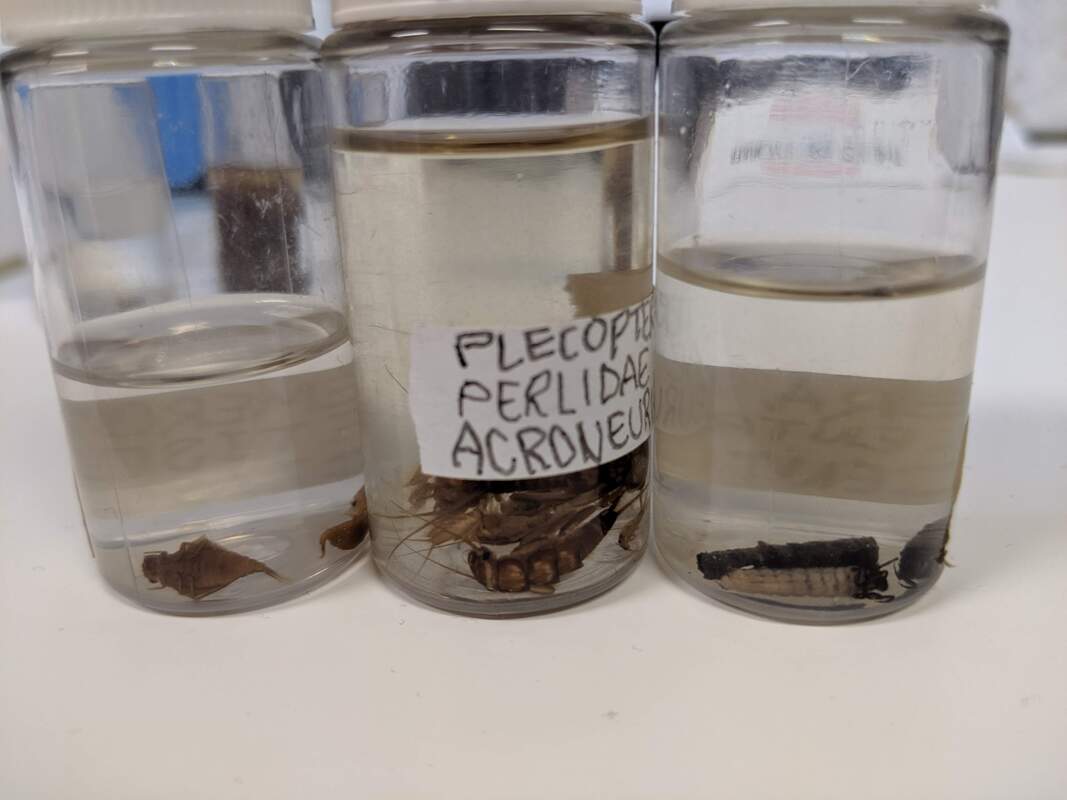
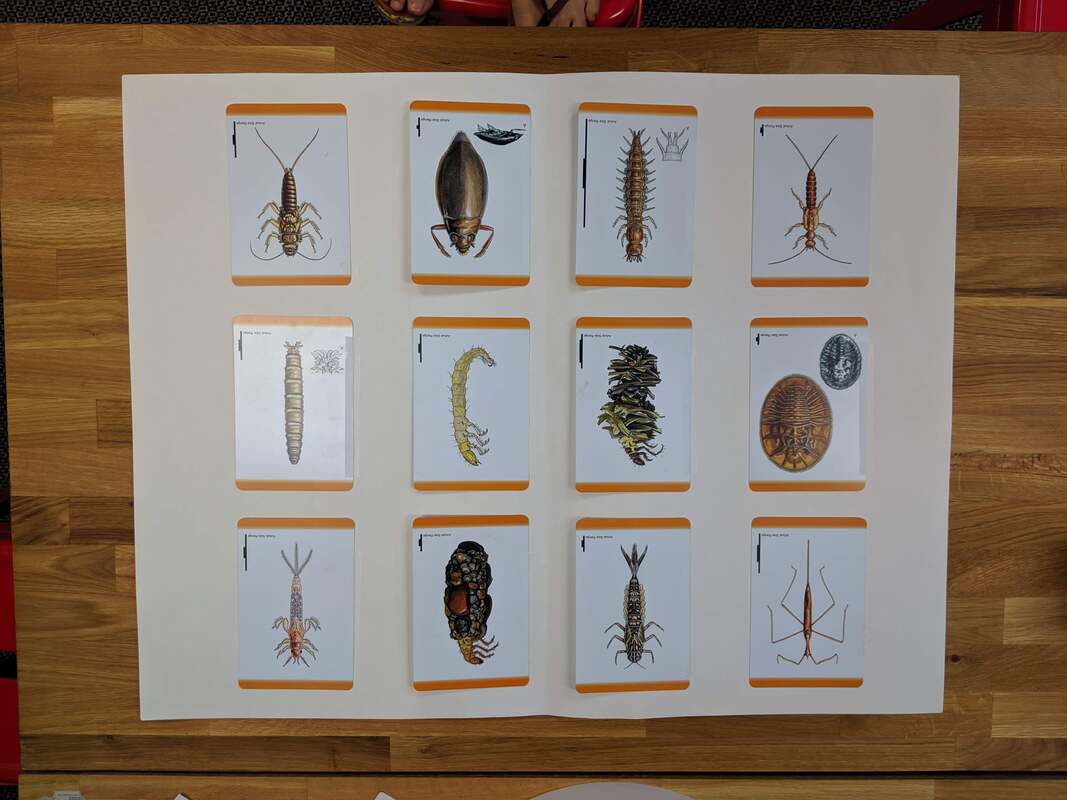
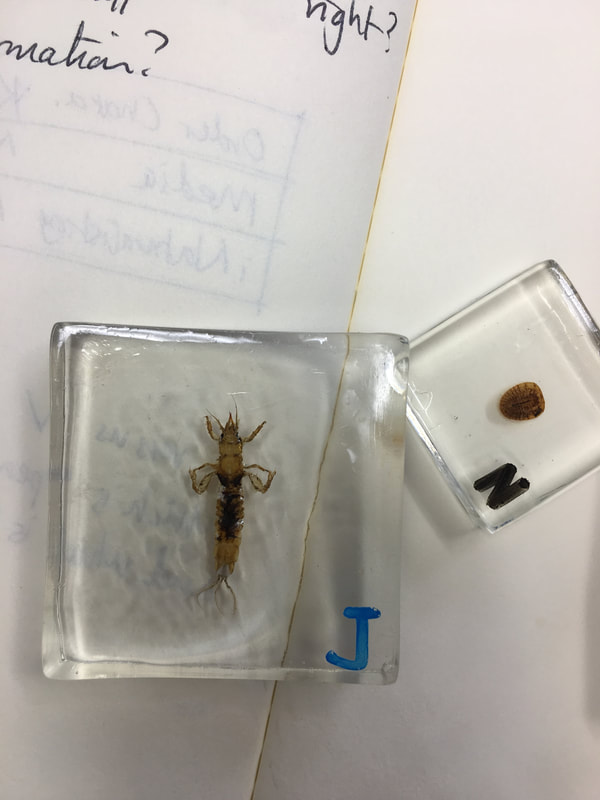
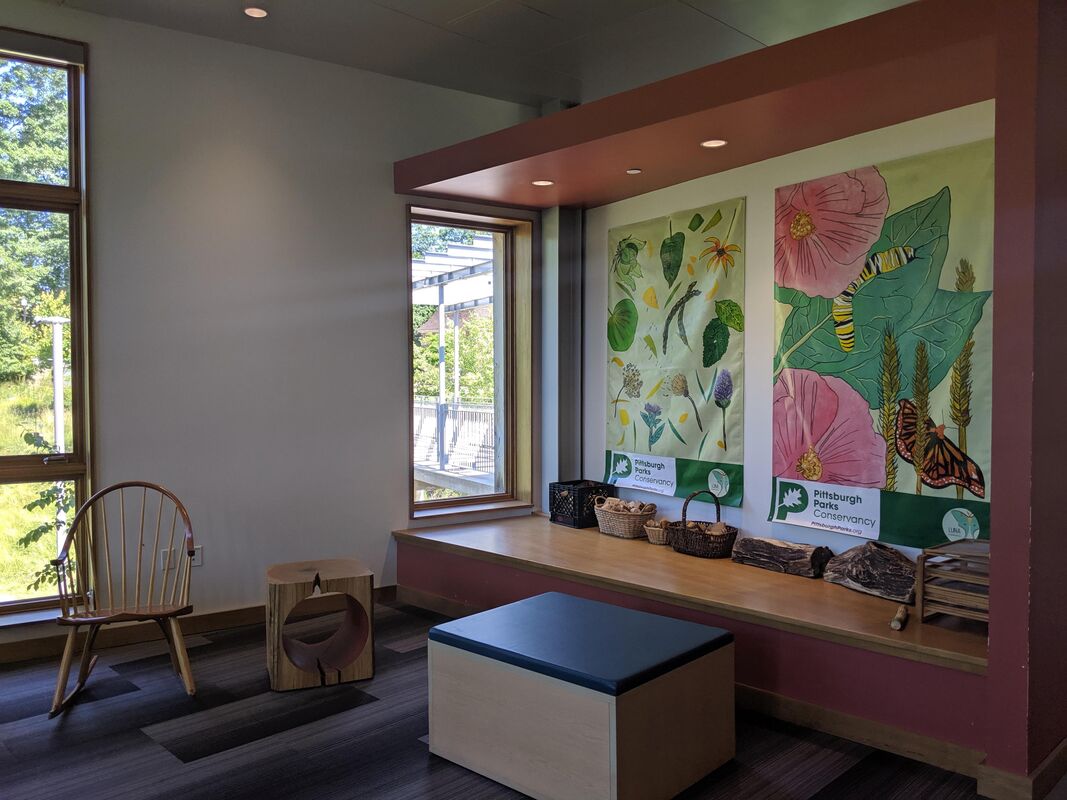
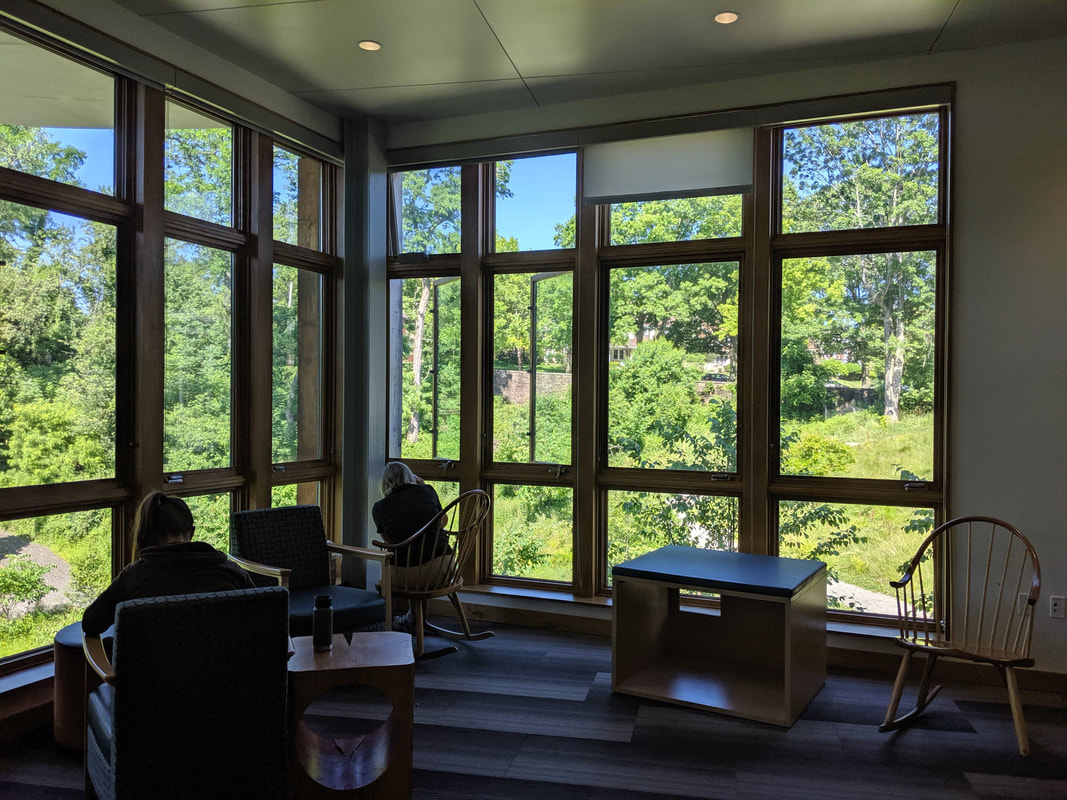
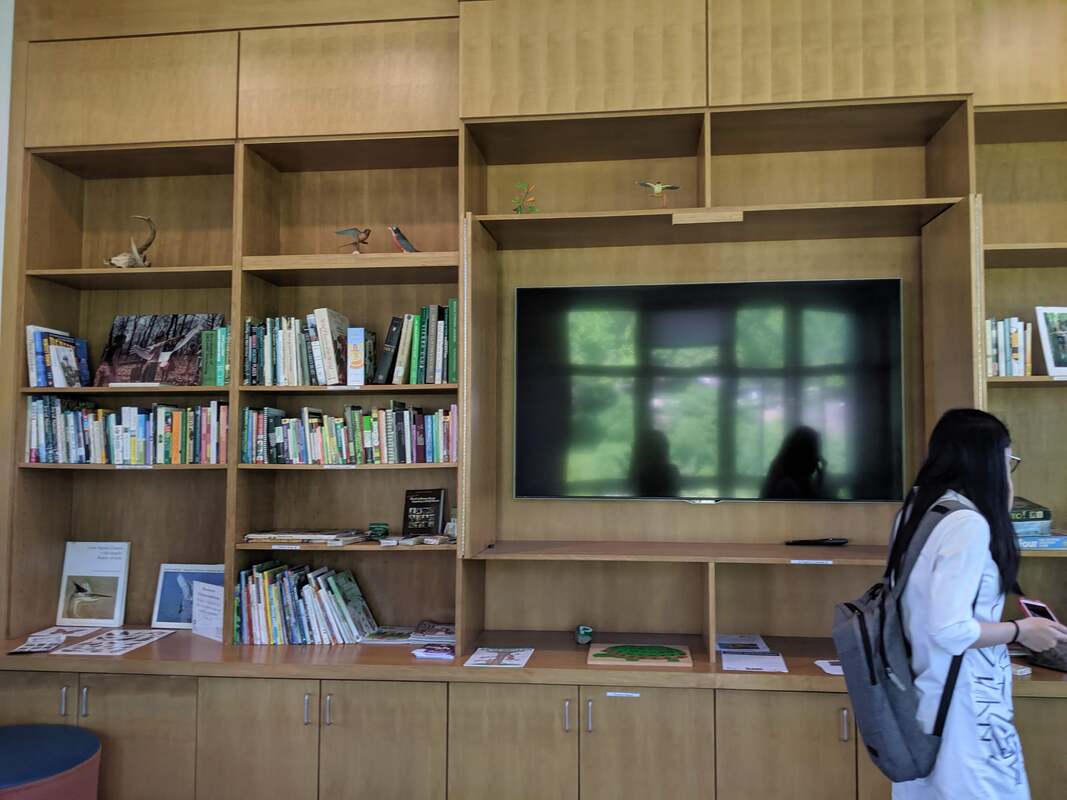
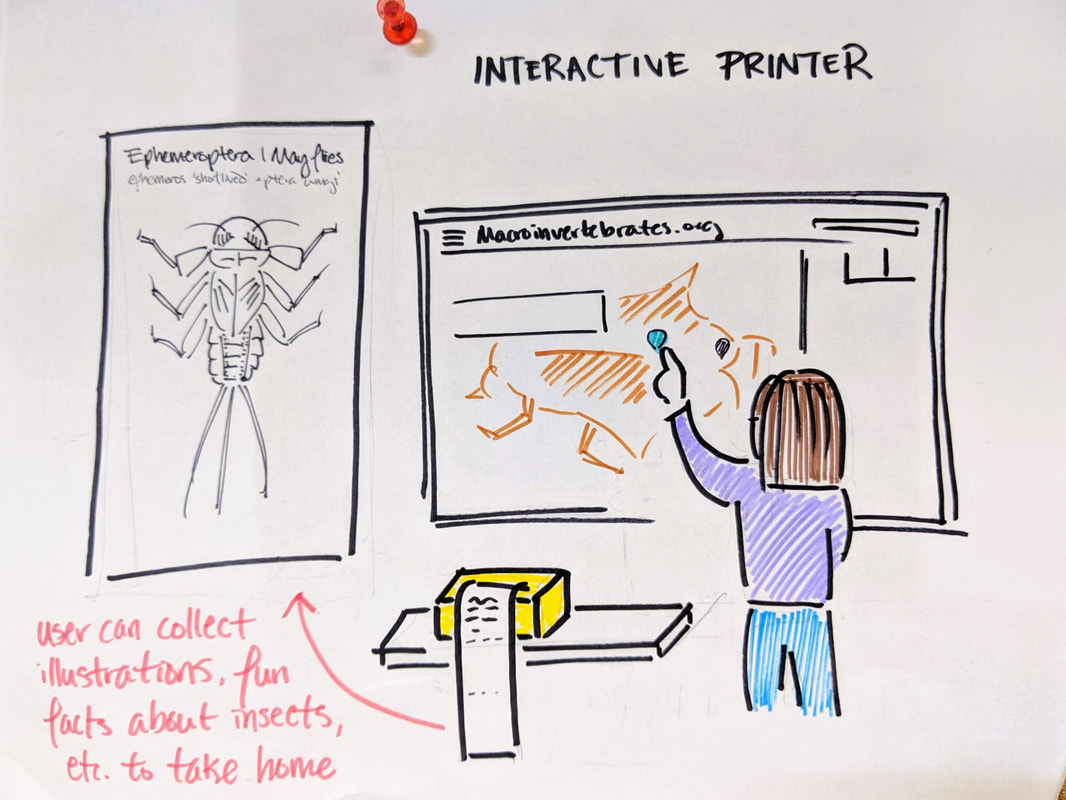
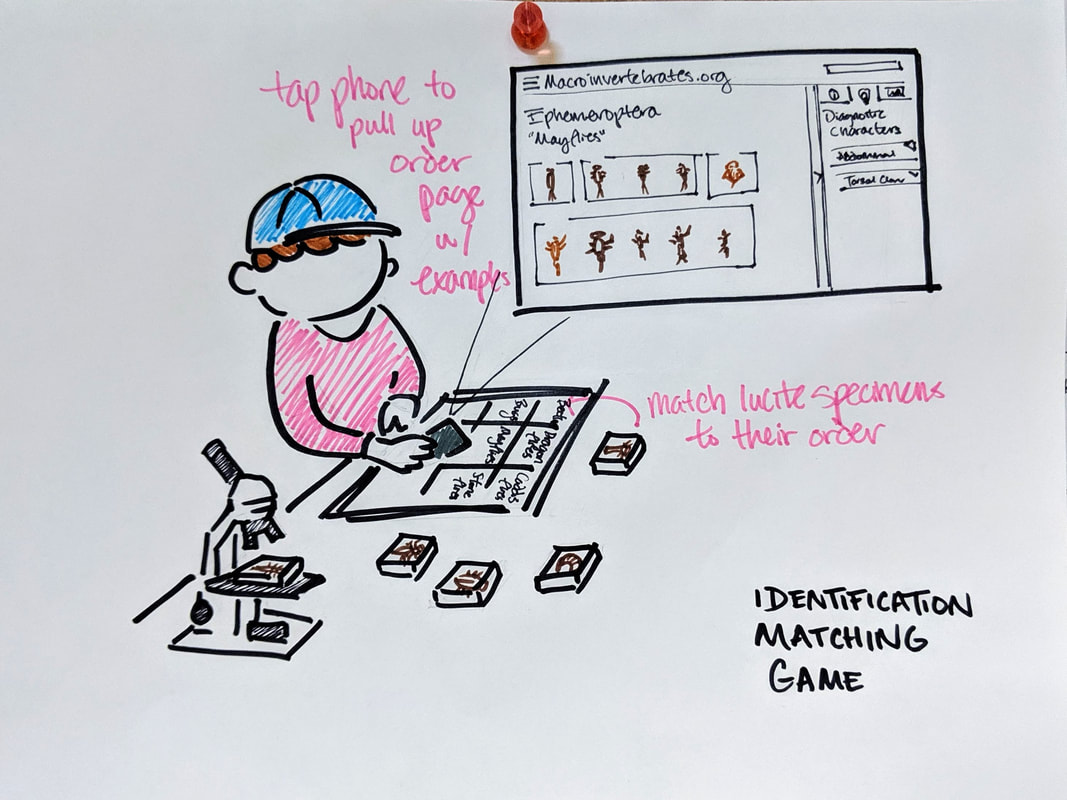
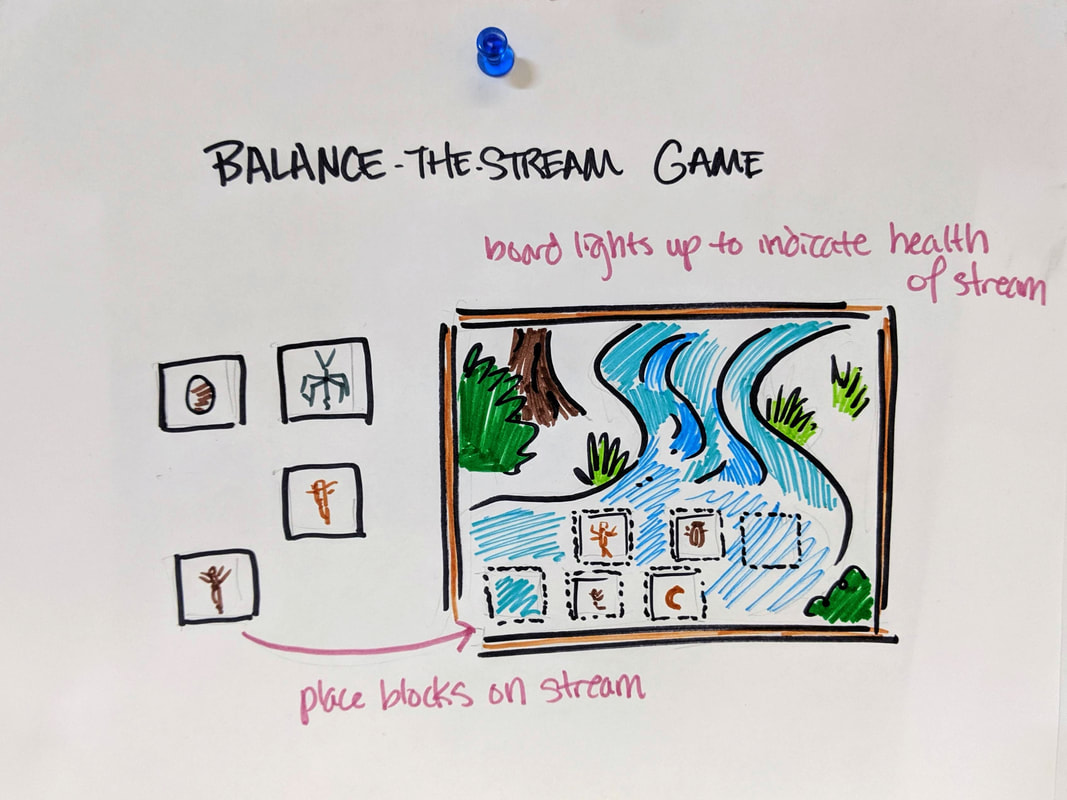
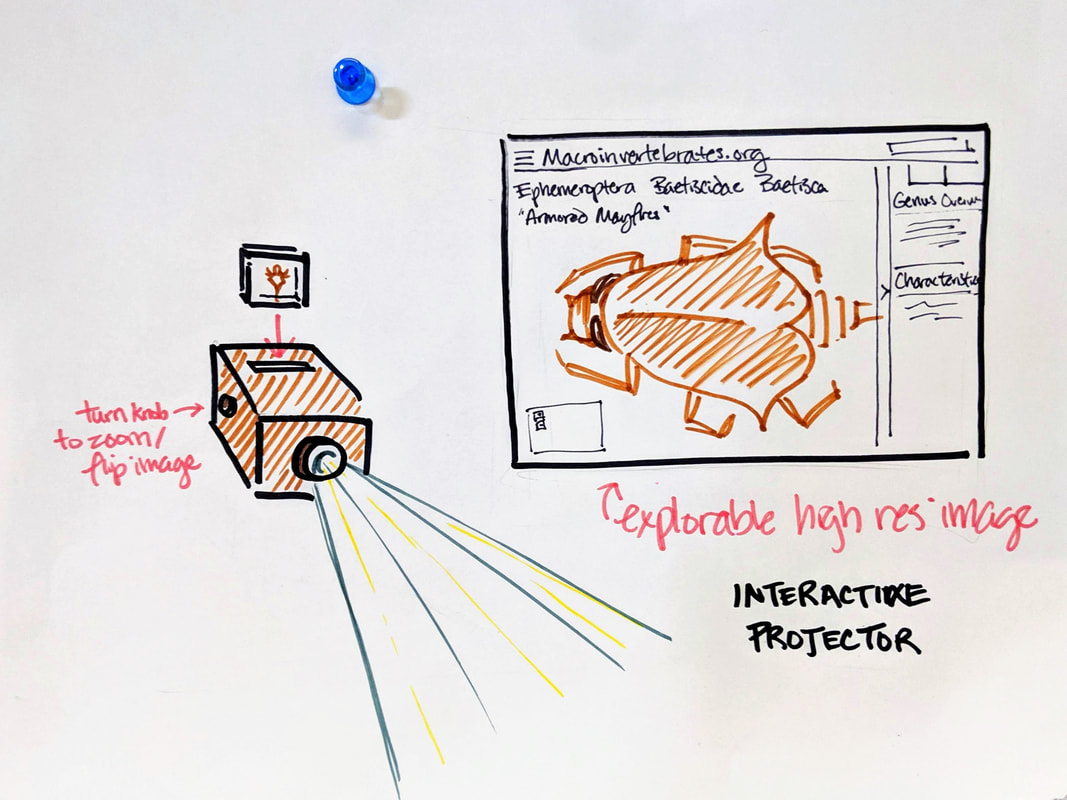
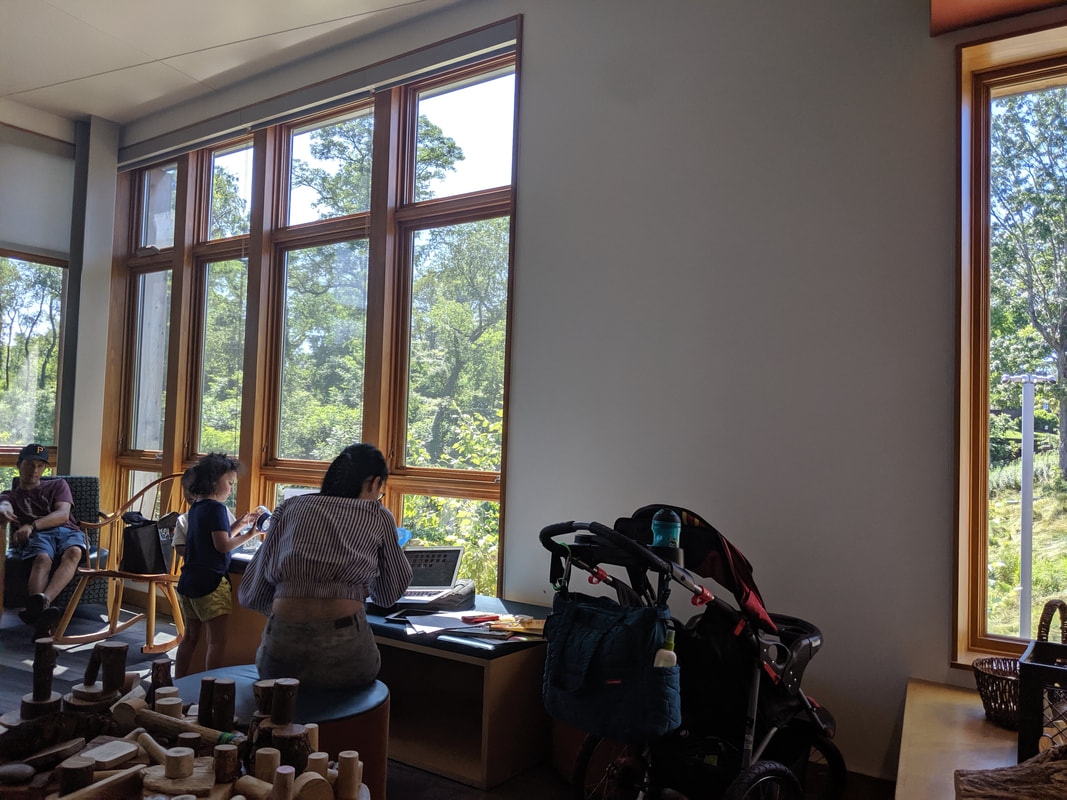
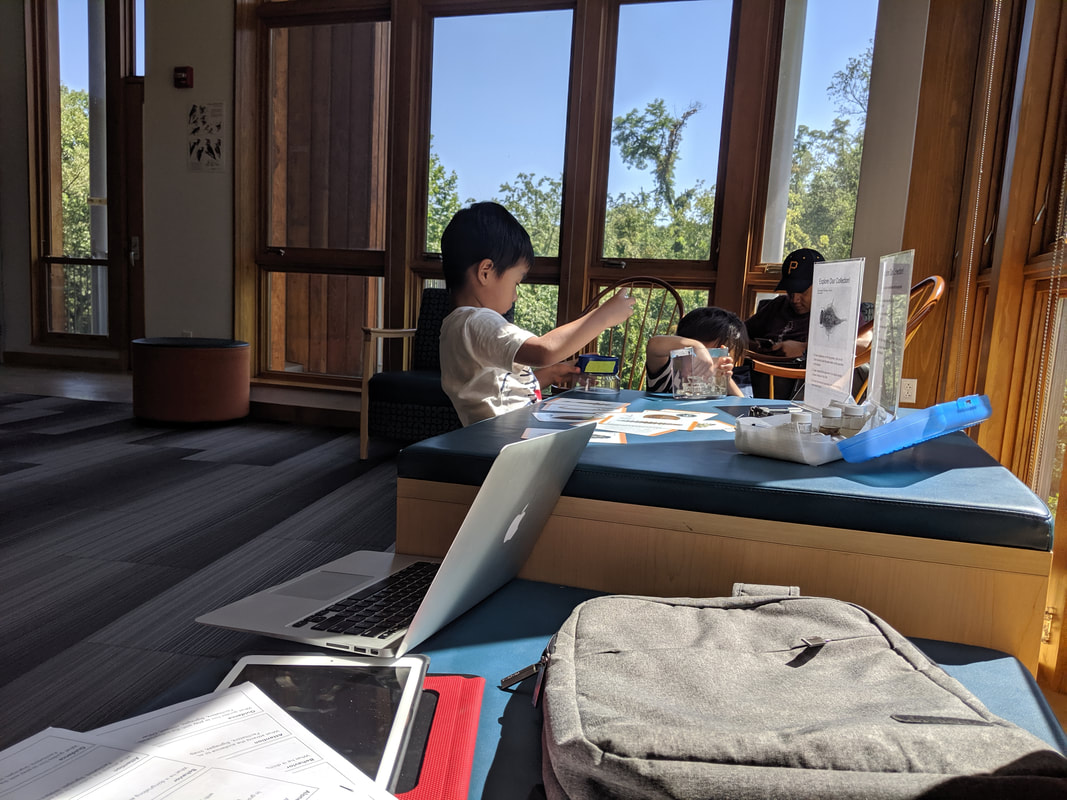
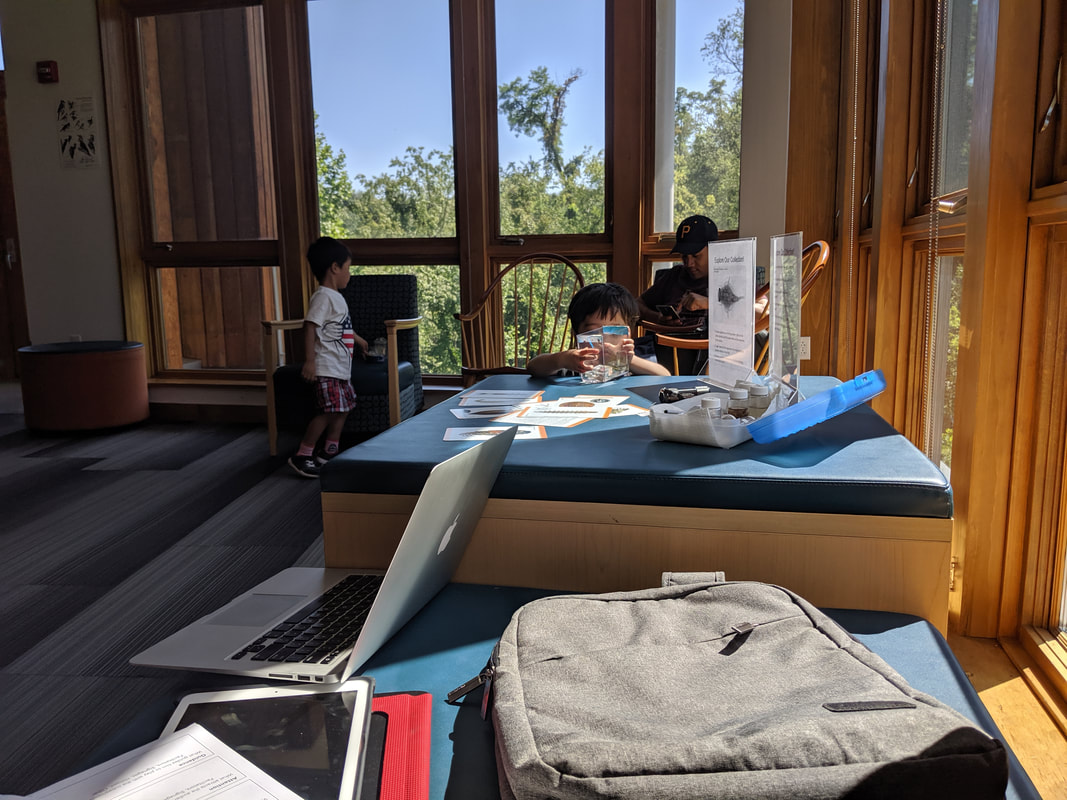
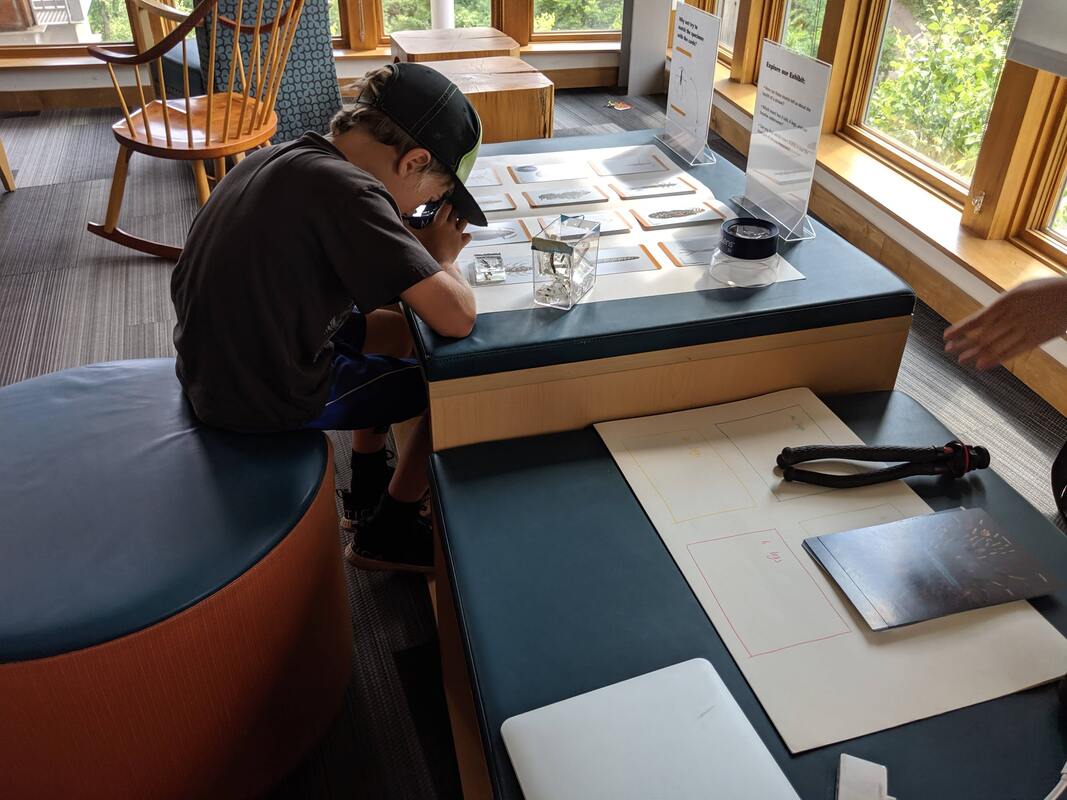
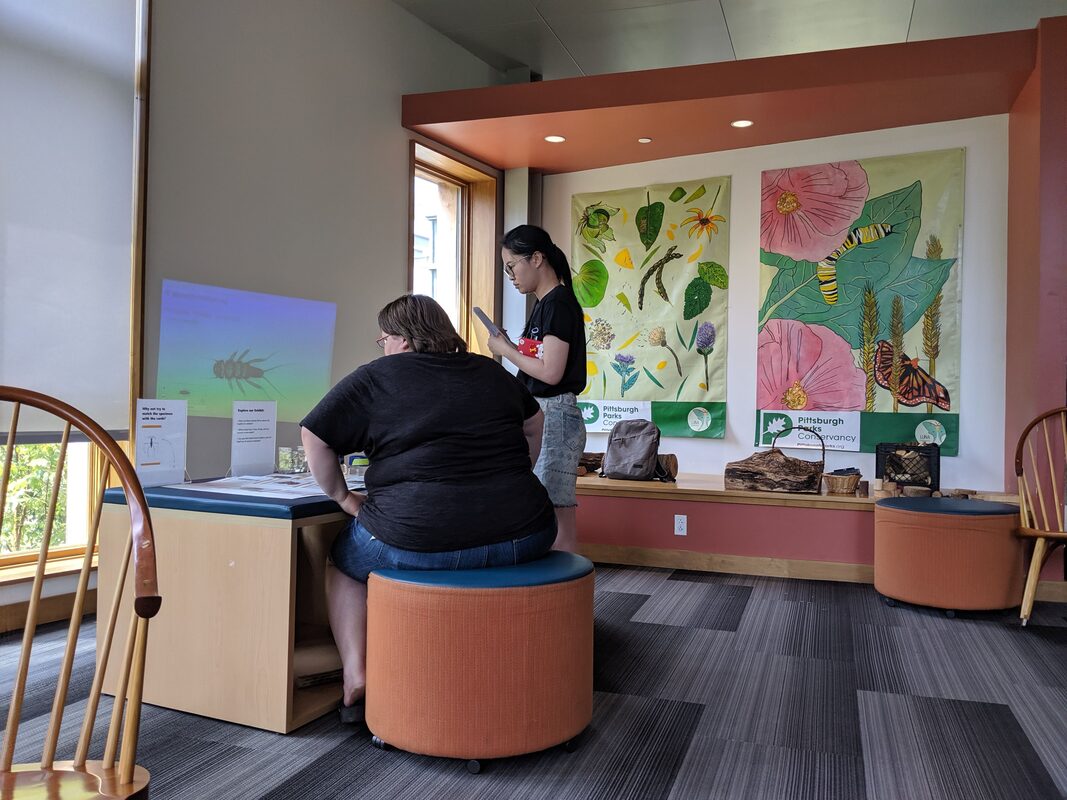
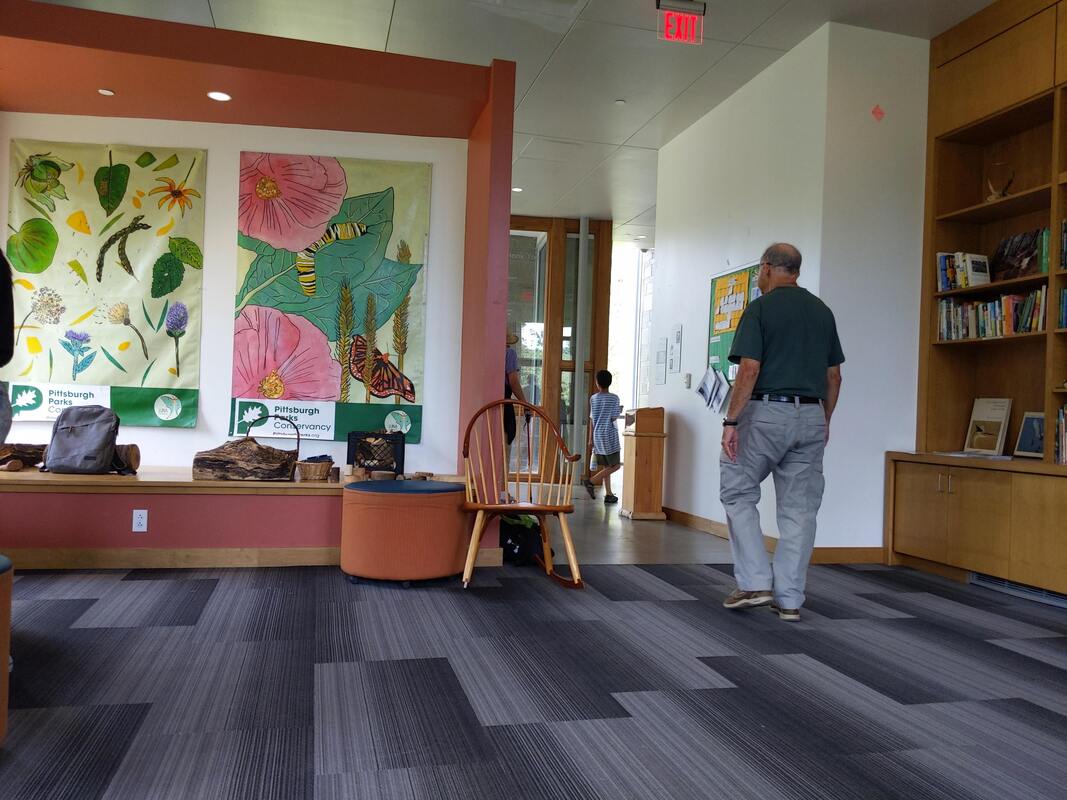
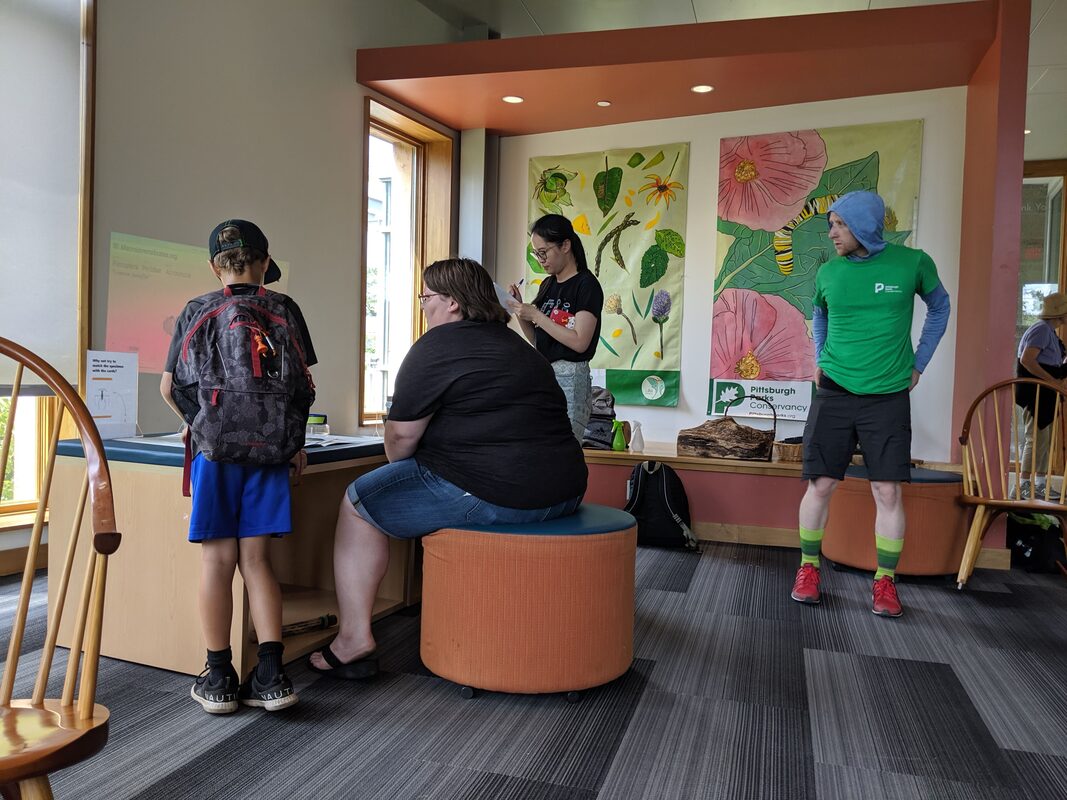
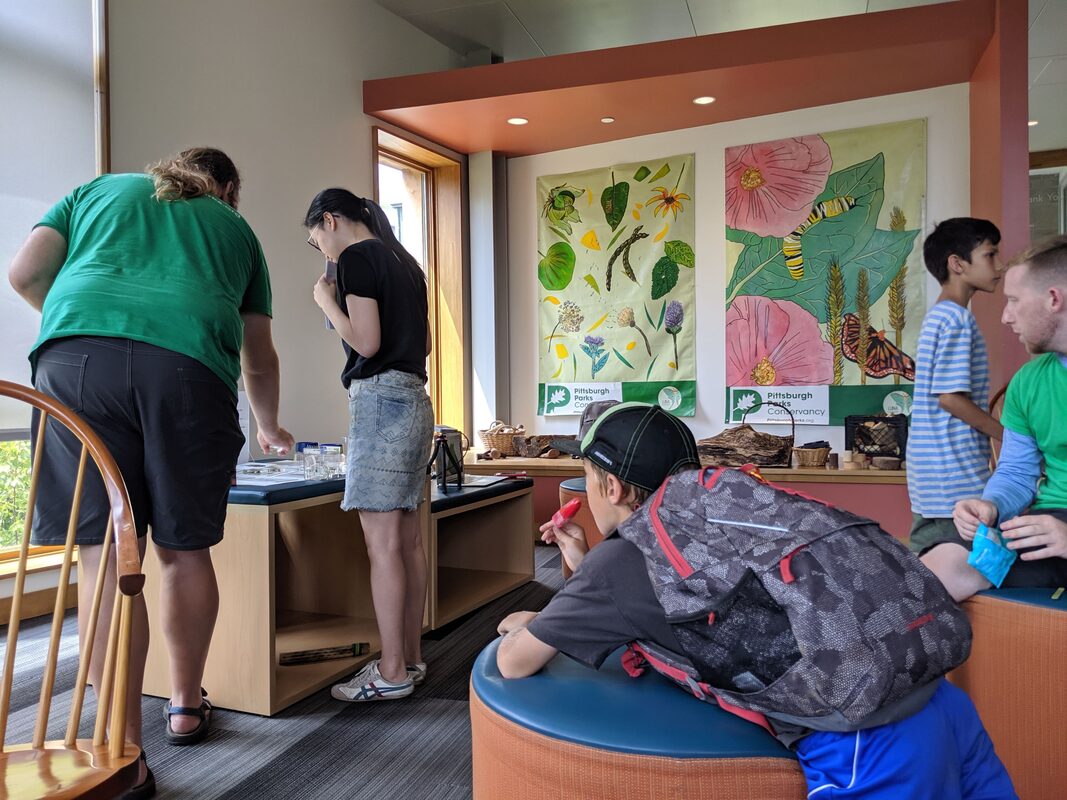
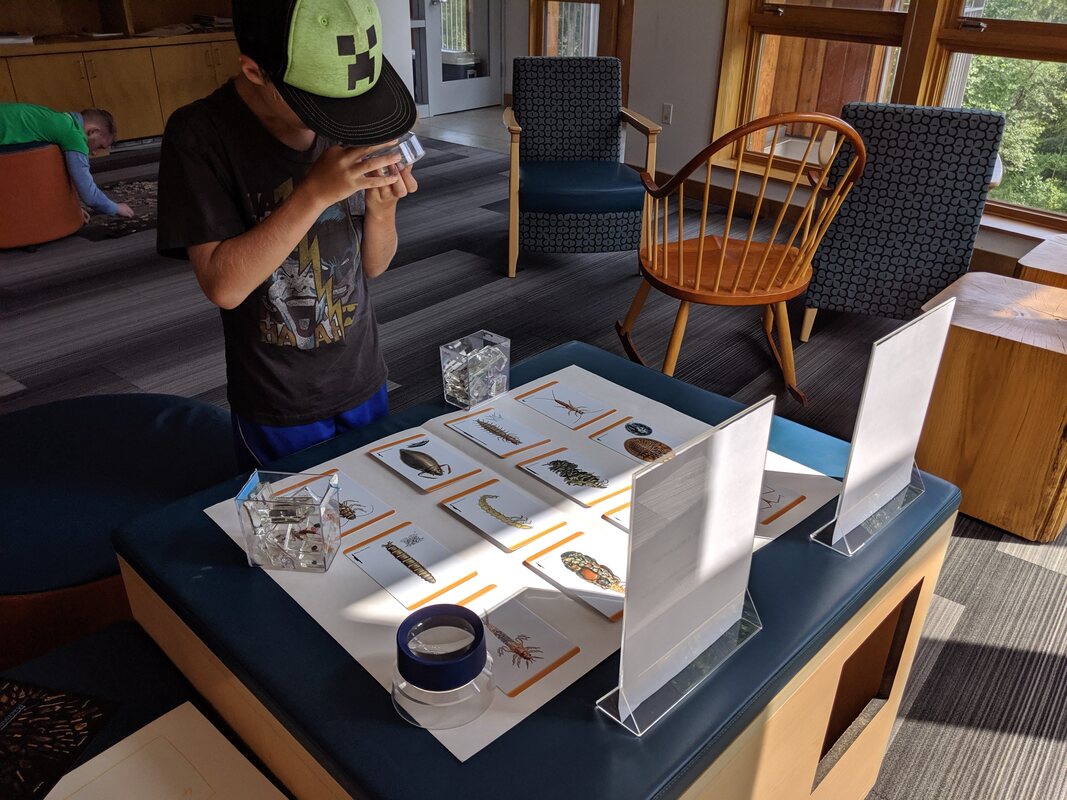
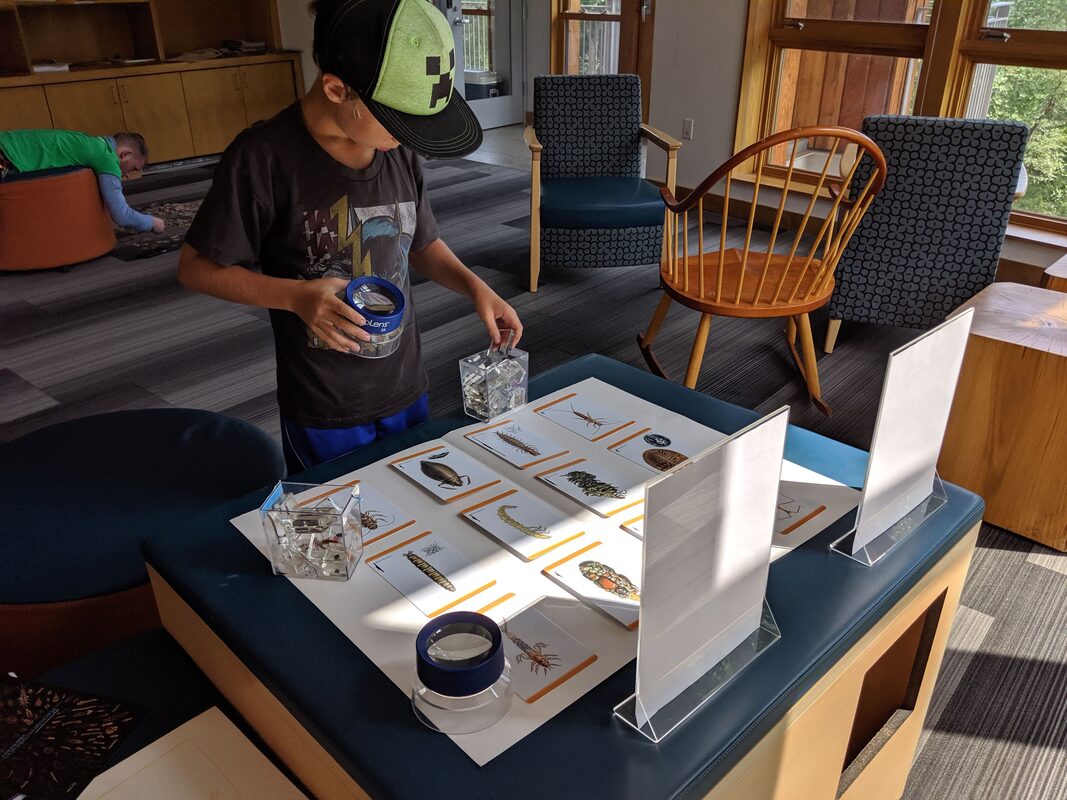
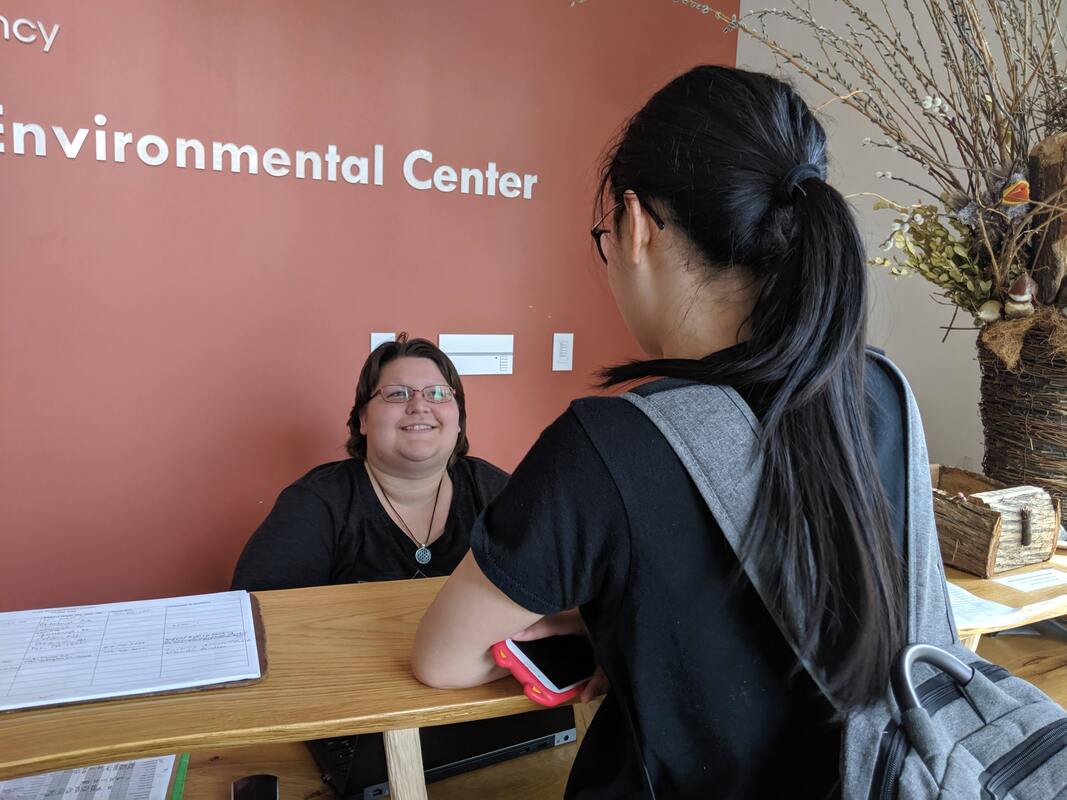
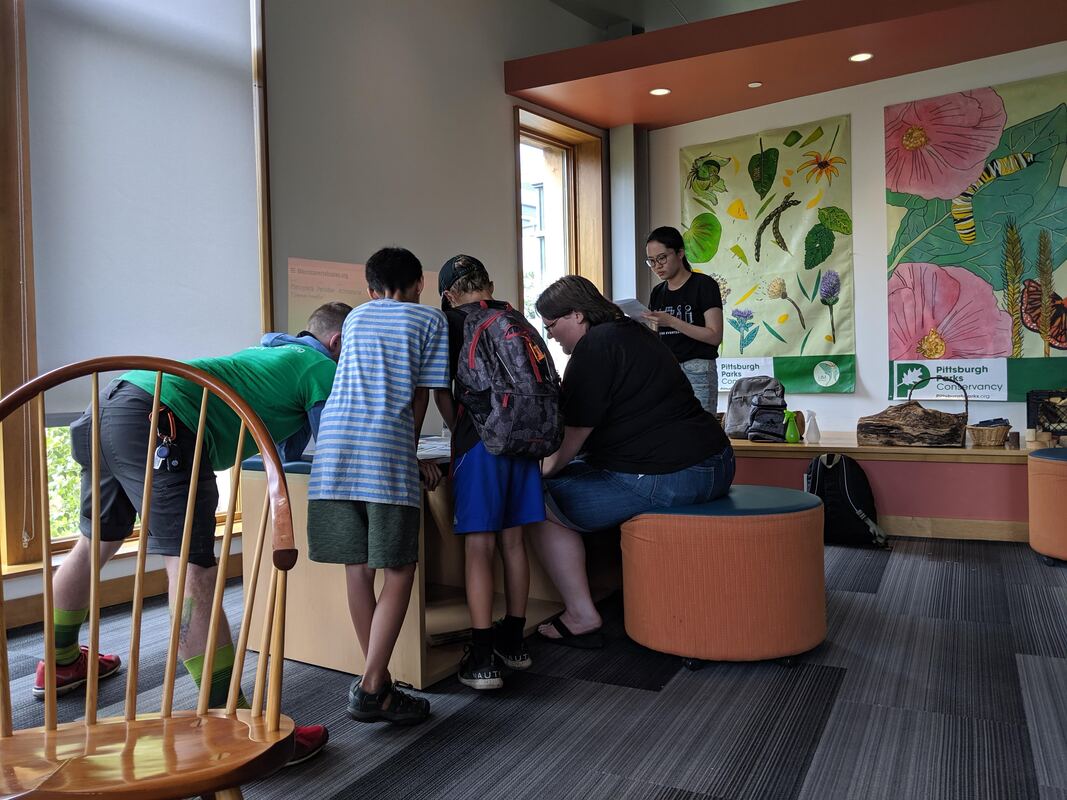
by Emily Chan, 2019 NSF REU Goals One of the projects me and the other students working on Macroinvertebrates.org had this summer was to leverage the resources we had available to us to create a pop-up/tabling kit for educators to use. Digital resources we had access to included the website, with its information and high resolution zoomable images, and physical resources we had included lucite specimen blocks from Powdermill, specimens in liquid, magnifying lenses, flashlights, various field guides, and Voshell cards. Interviews As part of our initial research, we interviewed educators Pat, Jessica, Lauren, Taiji, Steven, and Nayja. We learned that there are a variety of settings educators work in, and our kit would depend on what setting we wanted to design for. Possibilities included a classroom kit (used standalone or as part of a rotational activity, engagement time of 45 min max), a tabling kit (around 5min), a stream dump field kit (around 20 min), or a living room kit (indefinite). We choose to focus on designing for the living room (pictures below), a space in the Frick Environmental Center with benches, chairs, shelves, and a TV, since it seemed to offer the most interesting possibilities. The educators articulated two fundamental learning goals: 1) to generate awareness of the bugs existence, and appreciation of their intrinsic value, which includes learning about their life history and their structure/function; 2) to promote understanding of macroinvertebrates' role in the ecosystem, and how they reflect the condition of the environment. I was more interested in the first goal, while another student on our team was more interested in the second one. We ended up creating two kits, one inspired by each learning goal. Concept Development Concepts that we presented and got feedback on at the macro website launch event. Educators seemed most intrigued by the "Balance-the-Stream Game". However, before jumping into developing one concept, we realized we still didn't have much information on who our audience was and how they would engage with our kit (what kind of questions would they ask about the bugs? How would they interact with the blocks? Which aspects of the bugs would they be most interested in and want to know more about?), and so we decided to go to the Frick Environmental Center to do some observation. Weekend Observation at the Frick Environmental Center We observed two main demographics at the Environmental Center on the weekend: older folks quietly browsing books near the bookshelf on their own, and parents with one to three kids, most under the age of 6, taking a break inside before or after a hike to cool down on a hot day. The older people who were just browsing usually only staying for a few minutes, but the parents with kids often stayed for 10-30 minutes. The parents seemed to use the living room as a space where they could step back from paying attention to their kids and instead sit in a corner and relax or use their phones while their kids amused themselves with the various toys in the room. When it came to interacting with the kit, many of the kids were very enthusiastic, but not necessarily in the way we’d like. Since the kids were much younger than we expected, they completely ignored any instructions, spoken or written, and required constant direction from their parents to be able to focus on engaging in any of the activities we’d prepared. Their preferred ways of interacting with our materials included moving the blocks from one box to the other, pouring the blocks onto the table, shaking the blocks, stacking them to build towers, using them as props or characters in make-believe stories, organizing the cards, etc. A few of the kids did engage in looking activities: one kid, who was shown how to look at blocks using the macro lens and flashlight, ran around looking at things in the room with the flashlight, and tried looking at each of the blocks under the macrolens, but only for a second or two each; another child expressed wonder, saying “wow” and making the observations “They kinda look scary but then they’re actually not”, “This one is like a giant house centipede”, and “It’s a stick bug”, as well as telling other kids “If you wanna look at bugs, you can”. Some older kids also tried to help younger ones interact with the exhibit correctly (“Here, use this” and “No Maisy, I’ll show you how to do it--you put it under here, and then you can see it better”). However, even those that did seem to understand the exhibit or expressed excitement or wonder (“Ooh bug!” or “Woah”) lost interest very quickly. Questions asked by the children included: “What is this bug?” “What are these for?” “What happens if you take them out?” In addition, multiple kids from different families said that they weren’t allowed to use the computer due to shabbat, which may be a complicating factor. Parents occasionally showed interest in the exhibit--one child brought a block over to her mother, who asked “What kind of bug is this?” Another parent came over to facilitate the exhibit for his son, giving directions like “Can you show me the legs?”, “Try this one, try the black one”, “What is this”, “Can you match this block?“ “you can see it larger” “Find me something like this”, “Are they the same? Are you sure?”, “Let’s try something else. What letter is this?”. When interviewed about what motivated him to facilitate, he simply said: “I just want to see what they understand.” However, for the most part, parents were indifferent to the exhibit. Insights:
Weekday Observation We went back to the Environmental Center on a weekday around 2pm, and stayed until 5. There were far fewer people there than we'd anticipated--it seems that most of the students doing summer programs didn't wait for pickup inside the center. We talked to staff at the center, who recommended that if we wanted to do a living room kit, we should find some way to secure all the pieces of the kit, since everything that isn't nailed down would be easily lost and broken, and there's no one to supervise or chaperone. There were one or two older kids around who had naturalist training, and had the observational skills to engage properly with the matching activity. They seemed to enjoy the activity, and their only suggestion was making sure that all the blocks had matching cards. Insights:
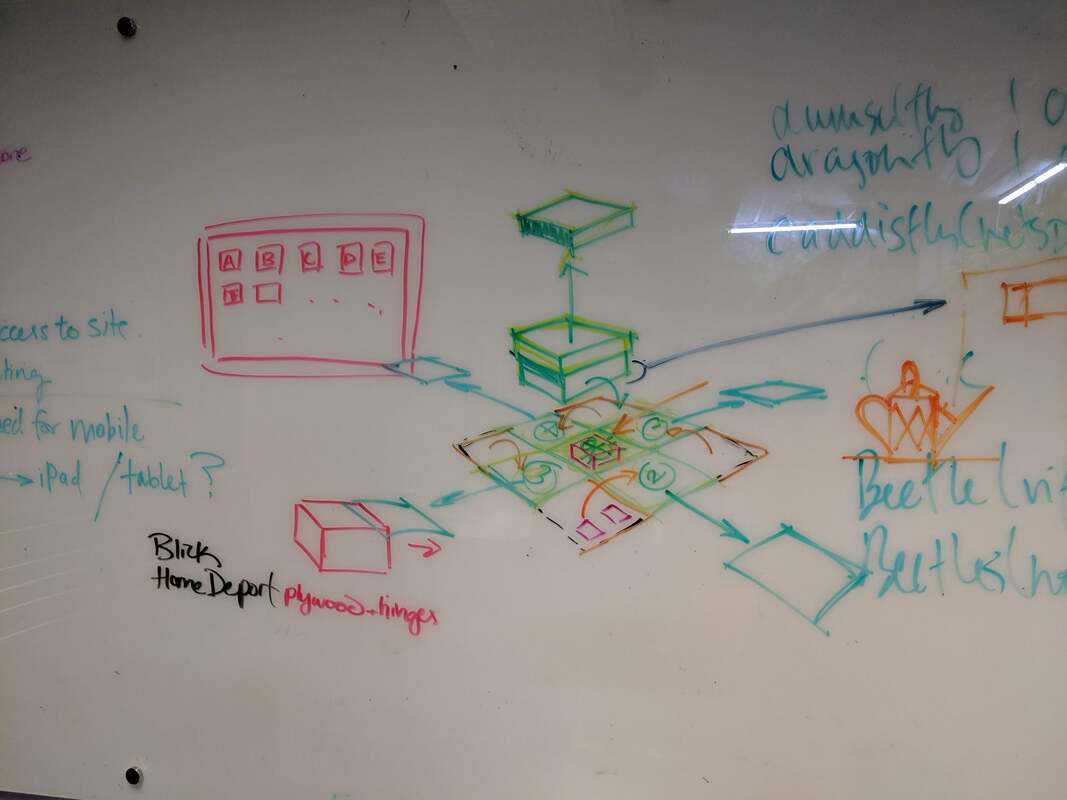
Final Prototype Based on our observation at the Environmental Center, we realized that the living room was probably not the most suitable place for our kit. Therefore, we focused on creating something flexible, that could set up somewhere and used in a variety of settings. Since the kids seemed to like the matching and sorting activities, we decided to create a box that unfolded into a stream-themed board that could be used for either activity. Since the specimens we had were representative of what one would find at Powdermill, we decided to use a photo of Powdermill on the inside of the box, so that the box would be like an ecological vignette of that particular location. As an alternative to the clunky and fragile computer/projector setup, we built simple lettered stands for the blocks that had NFC tags linked to that specimen's webpage on the bottom, so that the tags wouldn't be directly on the blocks (which would prevent users from being able to look at the insects from any angle), and got a small NFC enabled tablet to go with them. In addition to lucite blocks, NFC tagged stands, and a tablet, the box also contains a macro lens and a flashlight. We presented our final ideas to museum educators Pat and Jen, who gave us feedback. They said that they could see themselves using the kit and didn't think there was much they would change about it. Next steps:
If work on the kit continues, I'd like to see one more iteration using a sturdier material, such as gatorboard, with the lining printed on vinyl or a similar waterproof material. It could also incorporate magnets along the edges, so the box snaps together. In addition, it would be nice to see some way of making the cards detachable/creating other activities for the board that could be swapped in and out. Most importantly, I think there would be a lot of educational value in creating an additional box for Frick Park using an image of a stream in Frick park as the background in order to highlight the way that the diversity of the insects found reflect the ecology and pollution of a site, to tie in the other learning goal that educators had. Comments are closed.
|
Project TeamAn interdisciplinary team Categories
All
Archives
June 2023
|



 RSS Feed
