MACROINVERTEBRATES.ORG
  • PROJECT
  • PEOPLE
  • PRODUCTS
  • Blog
  • Resources
    • Help
    • FAQ

Analyzing Macroinvertebrate Identification Resources

11/1/2016

 
By Jen Liu

​In preparation for the website redesign, we are conducting in-depth background research on existing guides and keys for identifying macroinvertebrates. The goal of this research is helping us develop a framework that maps out the design techniques and learning strategies used to scaffold the identification process, and compare those approaches across multiple sources.  This framework and inventory of solutions will help us reference and address challenges in the redesign process. 


Some of the guides and key we are using for this analysis include:

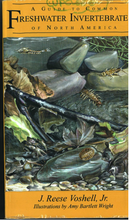
  • Voshell, J. Reese (2002). A Guide to Common Freshwater Invertebrates of North America.
  • Merritt, R. W., & Cummins, K. W. (1996). An introduction to the aquatic insects of North America
  • Izaak Walton League of America (2006). Guide to Aquatic Insects and Crustaceans.
  • Thorp, J. H. & Rogers, D.C. (2010). Field Guide to Freshwater Invertebrates of North America.
  • Jessup, B.K., Markowitz, K., & Stribling, J.B. (2002). Family-Level Key to the Stream Invertebrates of Maryland and Surrounding Areas.
  • Buguide.net

Our sources were selected to include a diverse range of users from novice identifiers to trained experts. This selection was made to reflect the range of users that we anticipate will be using our website. 

Analysis Approach - Take 1
In analyzing each source, we have created a procedure to walk through the guide to gain insight regarding specific learning strategies and the associated information design that supplements these strategies. Learning strategies in this context is the technique used to guide users to the next step in macroinvertebrate identification. Analyzing the associated information design is essential because these sources utilize a combination of visual and textual features to implement the strategy.  


We start off our analysis by examining key features of the guide, including physical features, purpose and structure of the guide. In doing so, we can understand the intended audiences, language or visual decisions that authors have made, and an overview how the book is meant to be used for identification. To demonstrate our procedure, segments of our analysis for the Voshell field guide is presented below.

In Voshell’s field guide, we are introduced to the structure of the book, organized in three sections, with the second section with information regarding identification to the family level. The guide also states that it was written with the assumption “that most users of this book have no formal training or experience with freshwater invertebrates.” By understanding these aspects, we can get an understanding of the overall organization and complexity of the source.

We then walk through the second section of the book, titled “Identification of Different Kinds” that guides the user to identify a macroinvertebrate sample down to the family level. In doing so, we break down each step of the identification process to establish the learning strategy and information design used at each point.

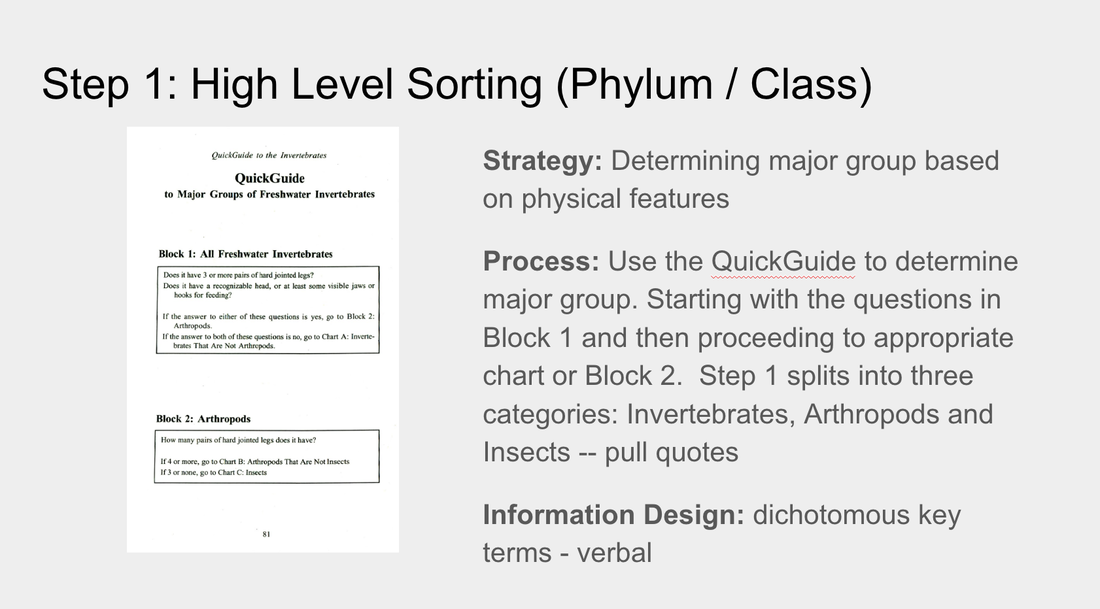
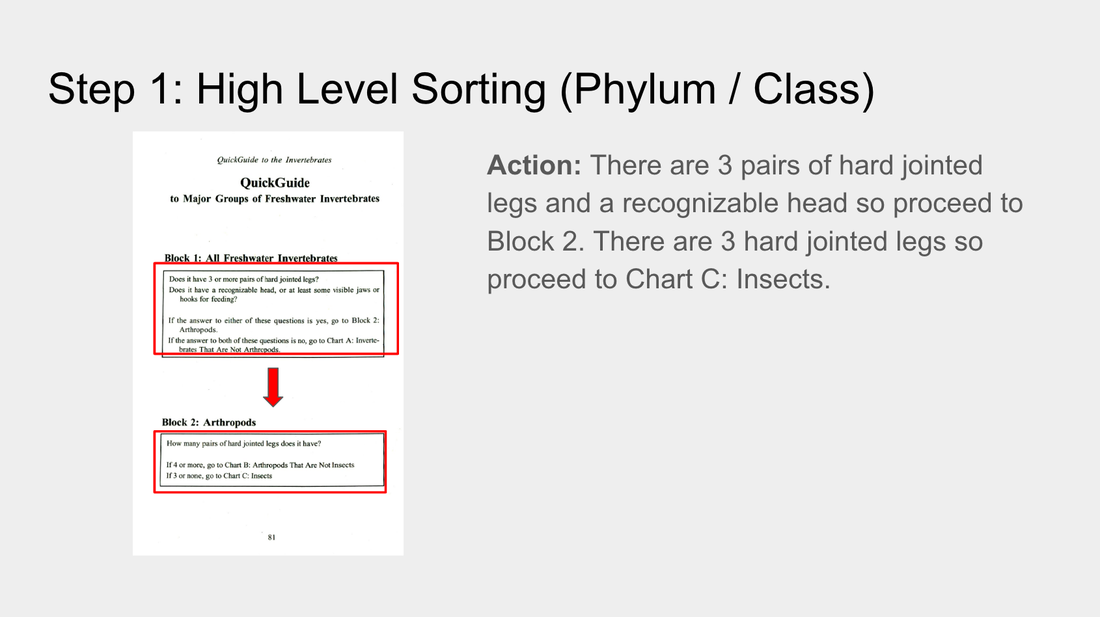
Voshell’s identification process starts out with a QuickGuide, which we describe labeled as a high-level sorting process at the Phylum / Class level. The learning strategy associated with the QuickGuide is to determine the major group based on salient physical features. The information design uses a verbal dichotomous key, arranged as questions in a series of blocks of that users must step through to reach a major group which then references a proceeding chart.

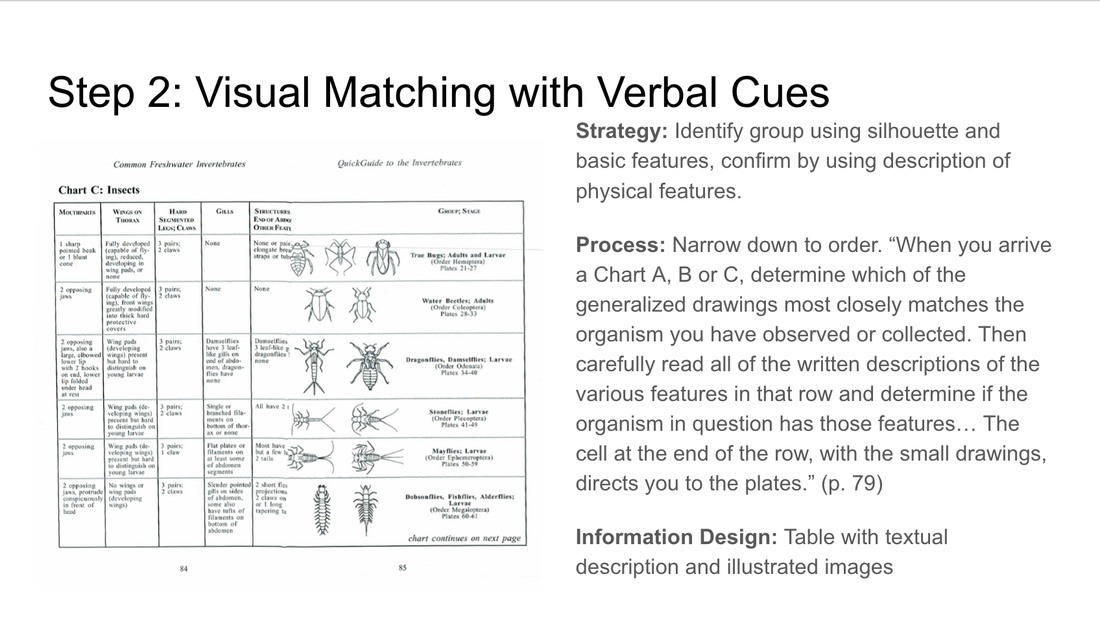
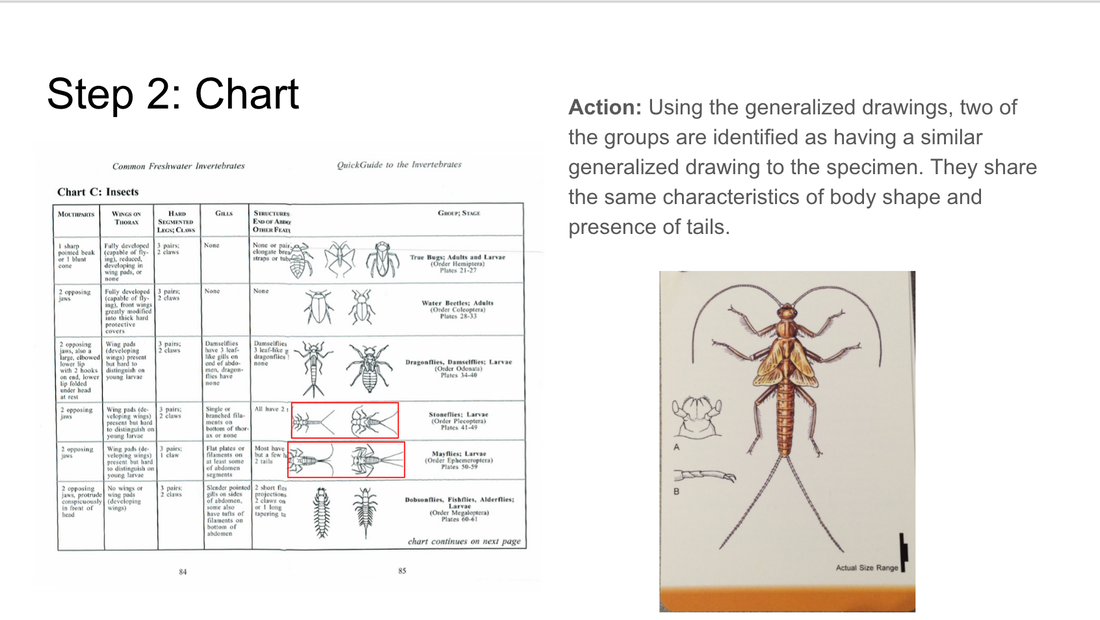
In viewing the charts associated with a major group, we then reach step 2 in which we are doing a visual match with verbal cues. The strategy that is used to identify the order level of the specimen uses silhouette and basic features, with confirmation by using description of physical features. To carry out this strategy, a table is designed to include black and white drawings that show basic features of each order and then descriptions of distinguishing diagnostic characters.

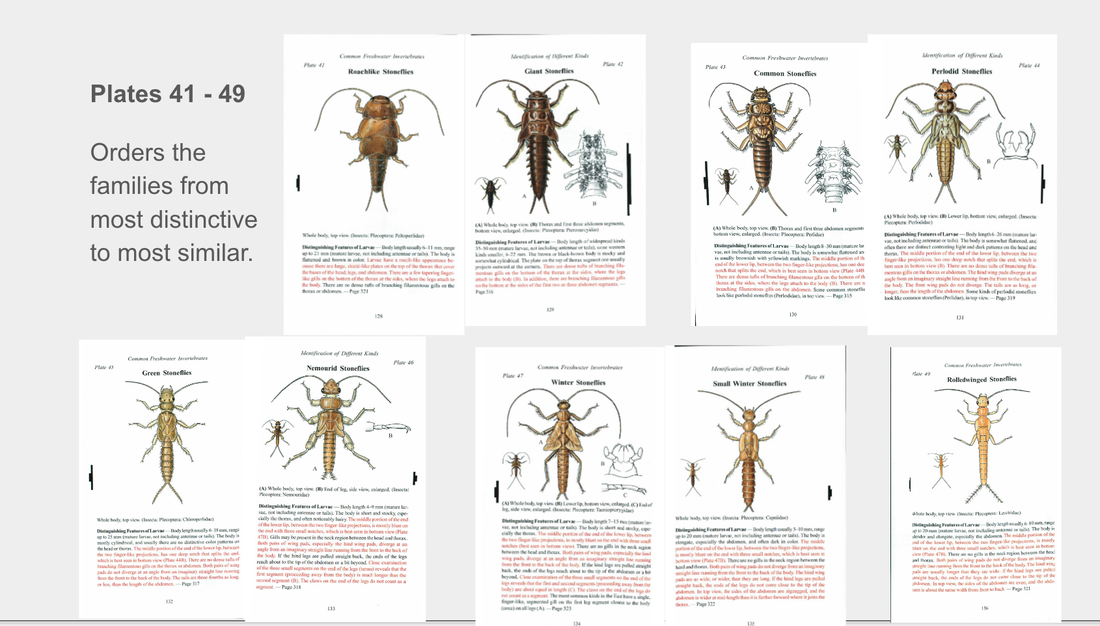
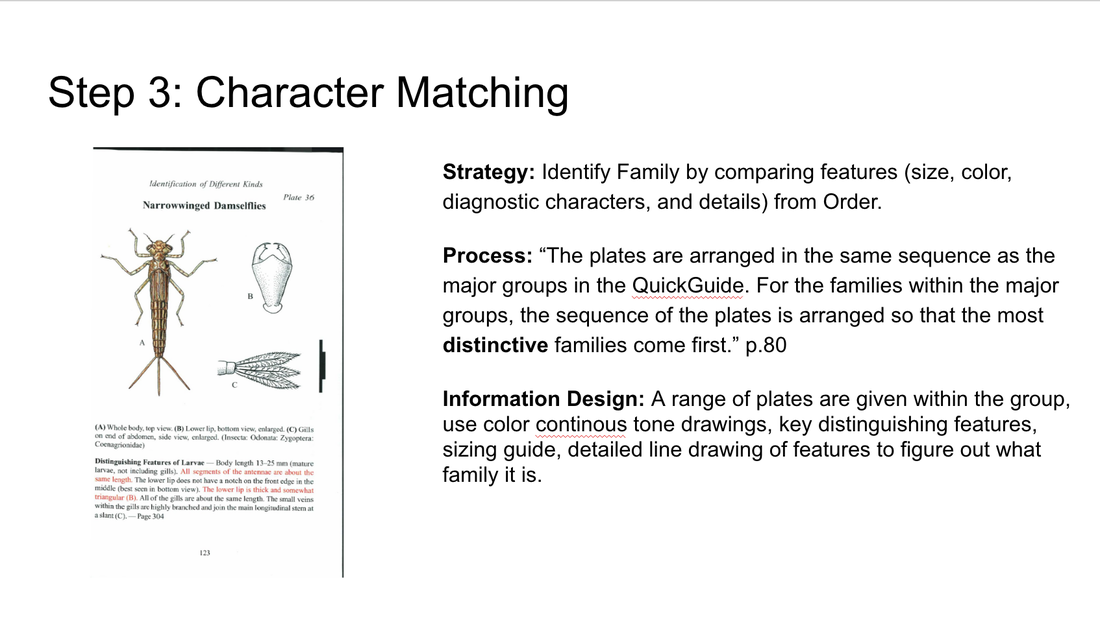
Once a specimen has been identified and confirmed, the user is directed to a range of pages containing plates of different families of the specific order. These plates are arranged in order of visual distinctiveness, with families that appear the most similar grouped closer together. The user then has to flip through to compare their specimen with the visual and textual information displayed on the plate.  The learning strategy for this process is to identify the family of the specimen by comparing features (size, color, diagnostic characters and details) among a range of similar families within the order. The plate is designed to have a color continuous tone drawing of the whole specimen, along with detailed line drawings of key features and a sizing guide. A paragraph describing distinguishing features of the larvae is on the bottom of the plate with key diagnostic characters bolded in red.
Picture
Picture
Picture
Picture
Picture
Picture
Picture

Comments are closed.

    Project Team

    An interdisciplinary team
    ​of entomologists, learning scientists, software engineers and designers collaborating to improve macroinvertebrate identification training and technologies with volunteer biomonitoring organizations.

    Categories

    All
    Broader Impacts
    By Clemson
    By CMU
    By Educators
    By Powdermill
    By Stroud
    Design Studies
    Educator Innovations
    Entomology
    Imaging
    Learning Research
    Mobile App
    NSF REU
    User Research

    Archives

    June 2023
    September 2022
    April 2022
    August 2021
    May 2021
    April 2021
    January 2021
    December 2020
    September 2020
    August 2020
    July 2020
    May 2020
    November 2019
    August 2019
    July 2019
    June 2019
    May 2019
    April 2019
    March 2019
    February 2019
    January 2019
    October 2018
    September 2018
    August 2018
    June 2018
    May 2018
    March 2018
    December 2017
    August 2017
    June 2017
    May 2017
    April 2017
    March 2017
    December 2016
    November 2016
    October 2016
    September 2016
    August 2016
    July 2016
    June 2016
    May 2016
    April 2016
    March 2016

    RSS Feed

Powered by Create your own unique website with customizable templates.
  • PROJECT
  • PEOPLE
  • PRODUCTS
  • Blog
  • Resources
    • Help
    • FAQ