MACROINVERTEBRATES.ORG
  • PROJECT
  • PEOPLE
  • PRODUCTS
  • Blog
  • Resources
    • Help
    • FAQ

Contextual Inquiry & 1st Round Test

7/18/2019

 
By Wei Gong
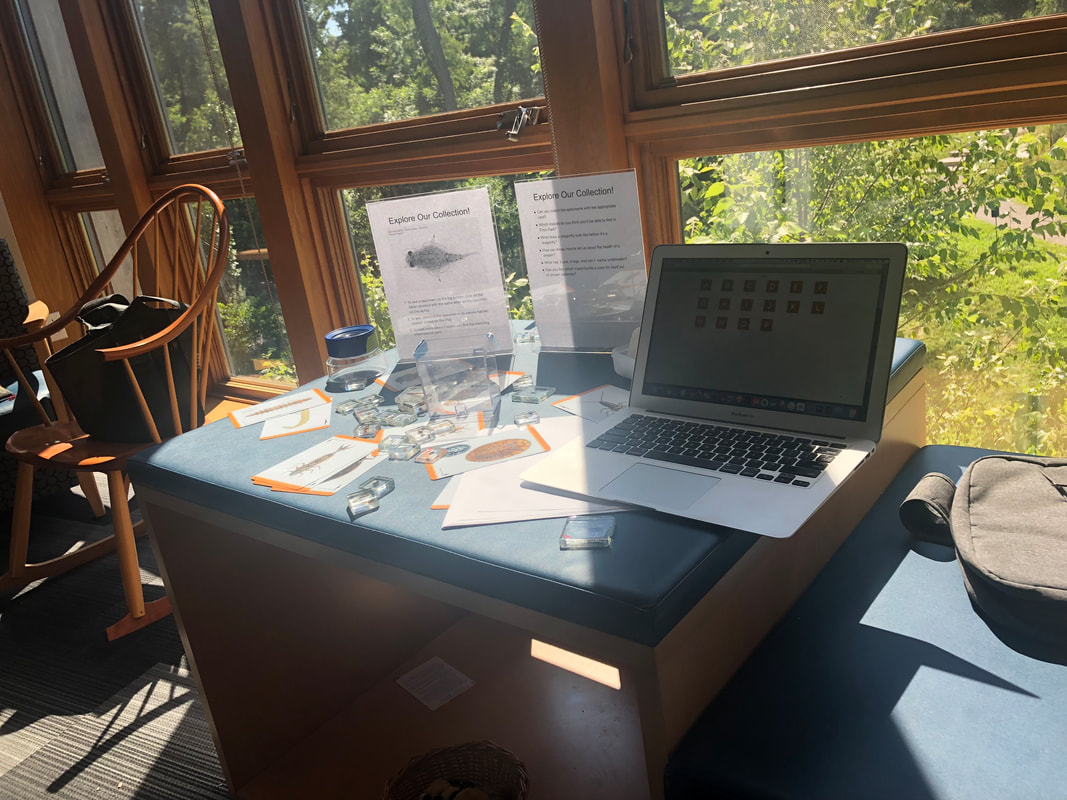
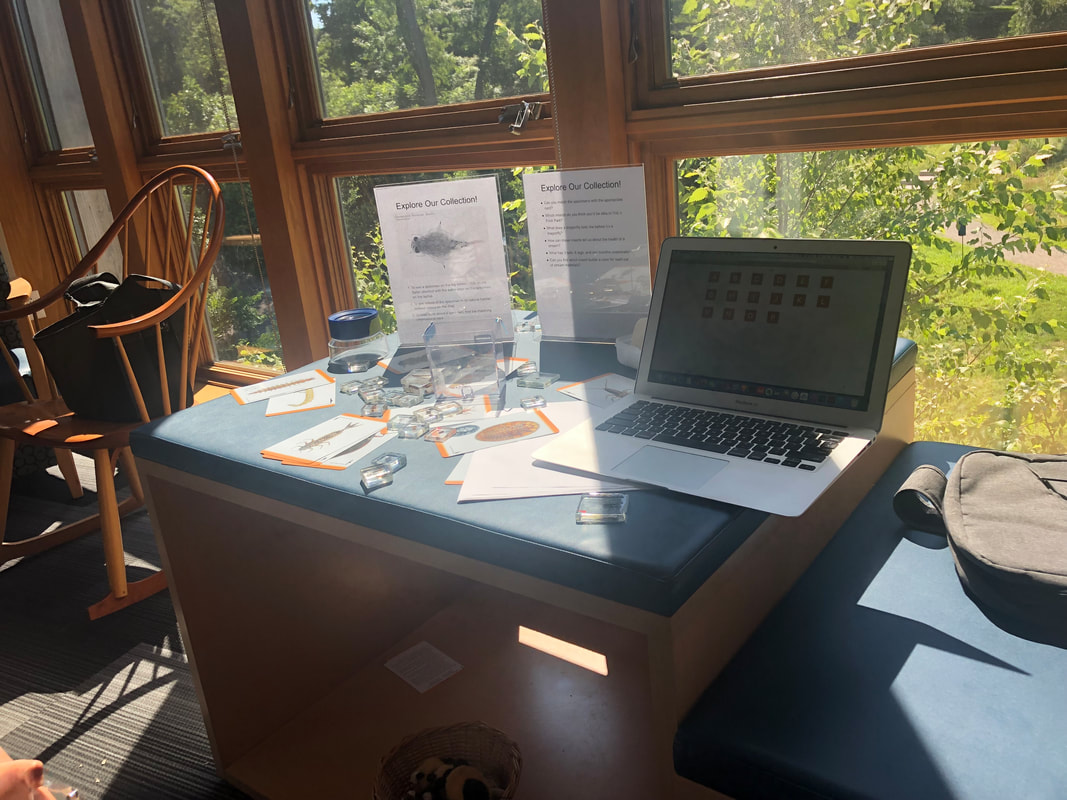
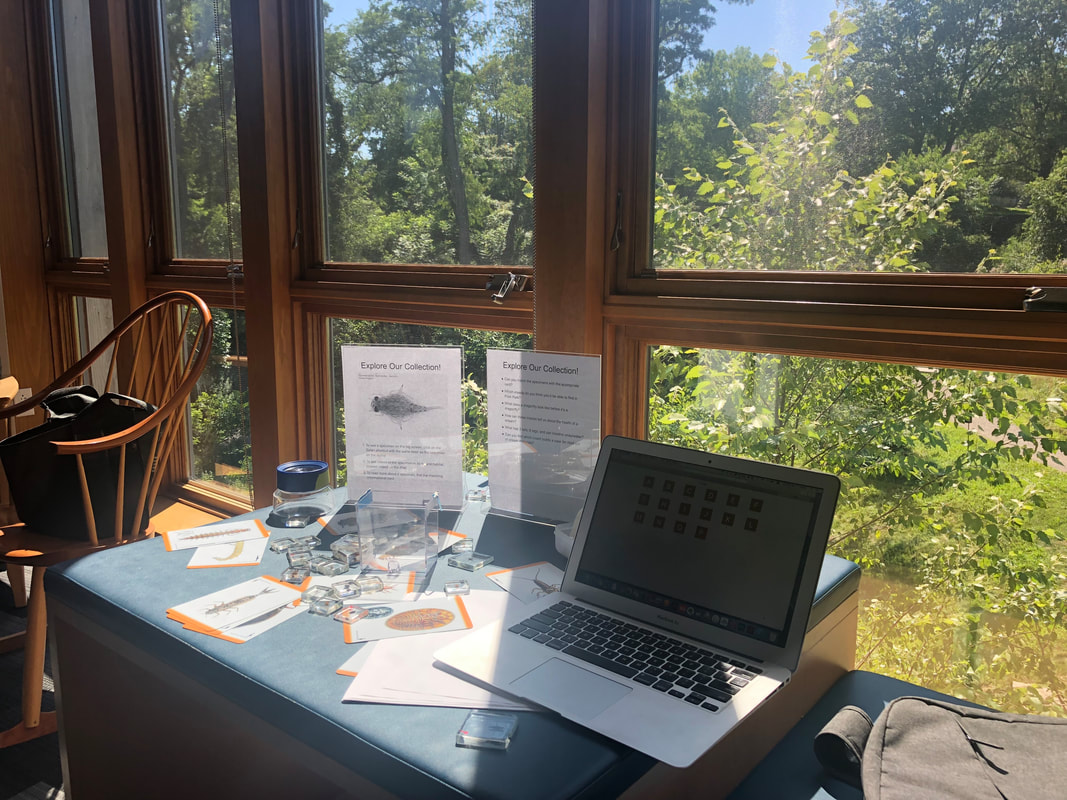
With some general concepts like guiding the visitors with some questions so that they can explore the exhibit on their own, and attracting the visitors with zoomable images on the screen, we did our first round user test in the living room of Frick Environmental Center. Actually, this is a combination of discovery research, generative research and user test, since we aimed to discover design opportunities, gain insights on design solutions, and test our concept at the same time. Before the test, we wrote a proposal for the test plan.  

User Test Proposal

Goal
  1. Understand the general profile of the audiences 
    1. Age range? Mostly kids or adults? 
    2. What are the audiences doing in the living room?
    3. Why they come here? What do they expect to see in the living room?
  2. What kind of experience do the stakeholders want people to have in the living room?
  3. How audiences interact with the kit in the living room? What engages them?Which of the artifacts they feel more attractive?
    1. blocks? Images? Video stories?
    2. What will the audience do after seeing images/videos on the computer?
    3. What other audiences do when one is interacting with the computer
  4. What do the audiences want to know about the insects when playing with the kit?
  5. Video/images on the big screen?

Materials 
  • Macroinvertebrate observation kit
  1. specimen blocks
  2. flashlight
  3. magnifying glass.
  4. other 
  • Signages
  1. Instruction for viewing Gigapan pictures and vidoes
    1. Do you want to see a big picture of the specimens? Check them on the computer
    2. Do you want to learn life stories of these unique organisms? See their stories on the iPad
    3. See whether you can match the blocks with the cards?
  2. Prompts/questions
    1. Do you know which of these insects can survive in Frick Park?
    2. Do you want to learn more about dragonfly’s life story?
  • Computer iPad: 
    • To show the Imagescorresponding with the blocks
  • iPad: 
    • To show Videos corresponding to the blocks telling stories. 

Observation Note Template
  1. Alone or in group
    1. If alone: age (child, teenager, young adult, parentage, senior)
    2. If in group: 
      1. with family: how many family members, profile
      2. with peers: how many, profile
  2. Behavior: What he is doing/looking/talking about in the living room before he comes to our exhibit
  3. Attention: What attracts the audience to our exhibit
    1. Facilitators
    2. Signages,
    3. images on the big screen
    4. blocks
    5. computer/iPad
    6. other
  4. Guidance: What guides him to interact with the blocks/computer/iPad
    1.  Facilitators
    2. Signages
    3. images on the big screen
    4. other
  5. Engagement: At what moment he is engaged and says words like “wow” 
  6. Questions: Which question attracts them most
  7. Preference: which of the resources attract them more
    1. blocks
    2. Images
    3. Videos
    4. cards
  8. Interaction:
    1. Does the audience talk to each other when they are interacting with the exhibit?
    2. What they talk about?
  9. Length of interaction: How long he/she spends with the exhibit kit
    1. Less than 1 minute
    2. 1 to 5 minutes
    3. 5 to 10 minutes
    4. 10-20 minutes
    5. more

Interview Question to Audiences:
  1. Why do you come to Frick Park today? 
  2. Why do you come to the living room? What do you want to do or see here?
  3. Among all of theses resources here, which one do you prefer and feel most attracting? 
  4. What do you want to know about these insects?

Interview Question to staff in the living room:
  1. What do you expect audiences to do here in the living room?
  2. What do you want the audience to take away interacting with the macroinvertebrate kit in the living room? 
​
Findings
We spent around 2 hours in the living room doing contextual inquiry and testing the concepts, from which we gained a lot of information. The key findings are shown below. 
Audience: 
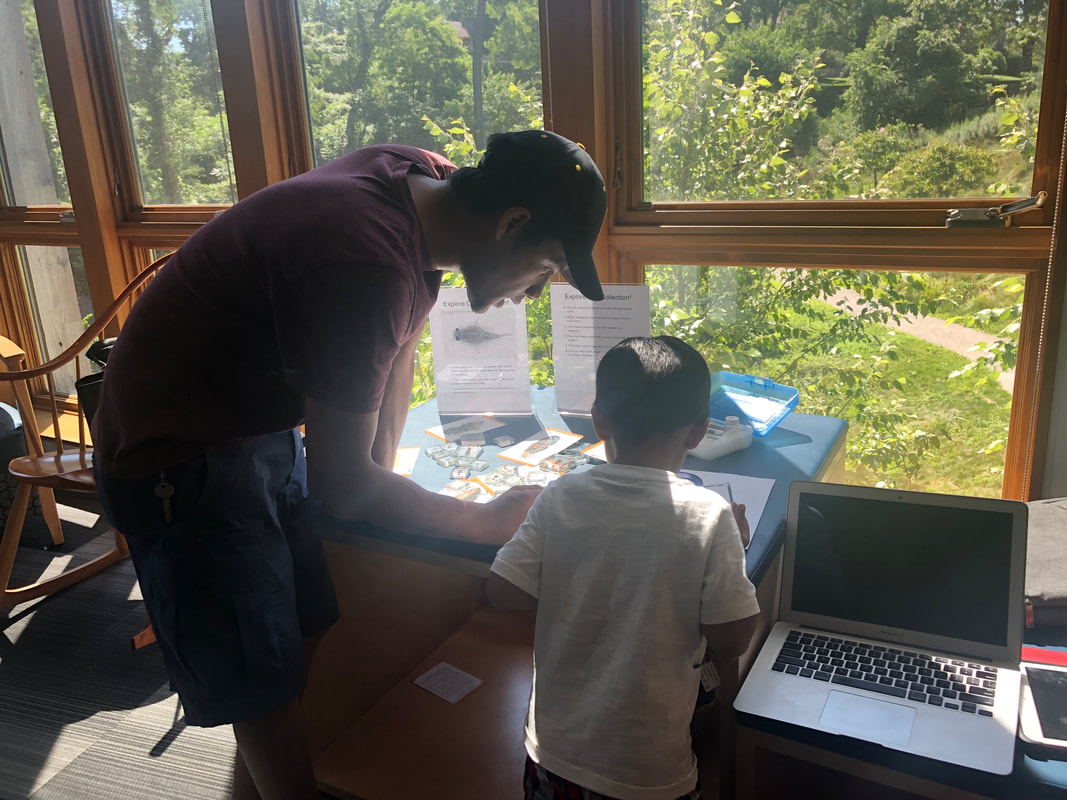
  1. During weekend, most of the visitors come to the living room of Frick Environmental Center with their family, usually a parent with 1-3 children under 6 years old.
  2. Children are more attracted to the exhibit than adults. Usually, parents will just sit on the seat or read books.
  3. One of the parents came to facilitate the children when he found they were very interested in the exhibit.
Attention: 
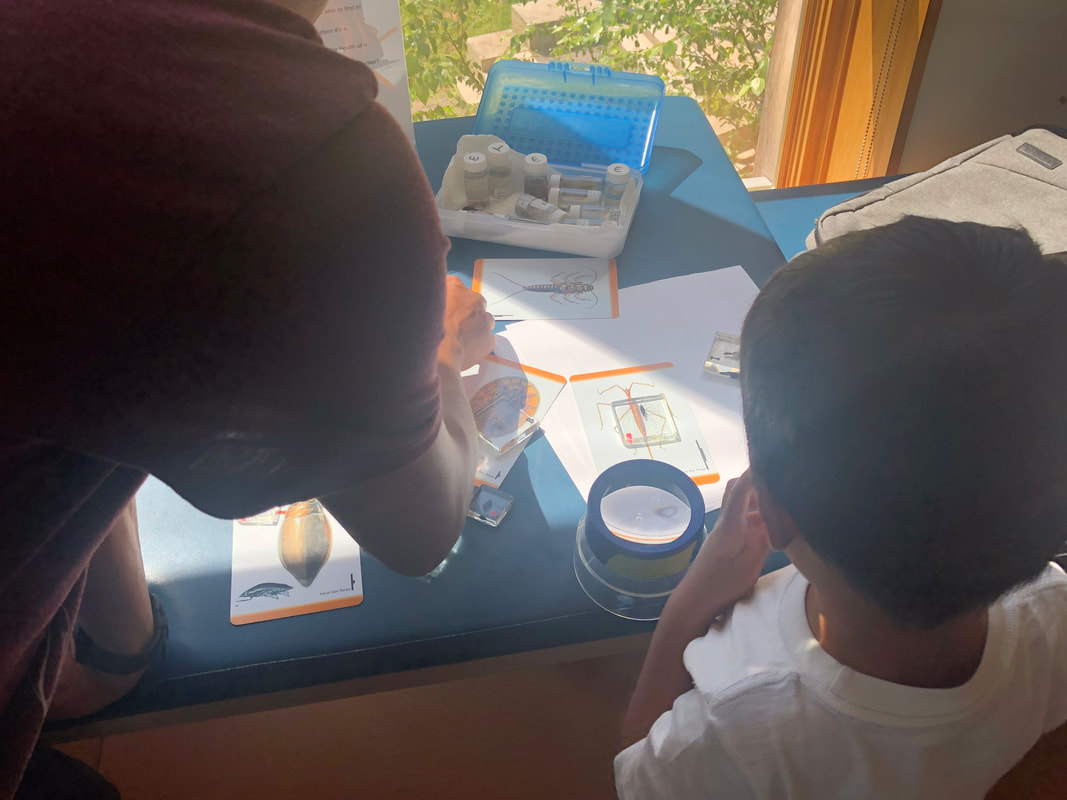
  1. Among all the materials (signages, computer, cards, blocks, flashlight, magnifying lenses), blocks caught children’s attention most and attracted them to the exhibit.
  2. The next attractive elements are magnifying lenses and flashlights. Children will play the blocks with these two things. 
Interaction with the kit: 
  • Children will start to play with the blocks on their own without reading the questions on the signages. Some younger children just treated the blocks as toys.
          Quotes

                “I want to make a tower with these blocks”
                “They are so pretty”
                “How does it feel to taste bugs”
  • Children will explore the blocks by putting them under the magnifying glass or checking them with the flashlight.
          Quotes
                 “So Cool” ---- After putting them down the magnifying glass.
  • Some children start to match the blocks with the images on the cards under the facilitation of their parents.
Interaction with each other: 
  • Sometimes children talk to each other when interacting with the kit
          Quotes
                 “I’ll show you how to play with the blocks, put your magnifying lenses above the blocks.”
  • Parents facilitate children when they notice they are interested in the kit
          Quotes
                 “You want to zoom in and out?”
                 “Let’s try another one”
                 “Can you match them(the block and the card)
                 “Do you want to see the legs?”
                 “I just noticed they are interested in it. I want to know whether they really understand it.” 
  • Parents don’t allow children to touch the computer
          Quotes
                  “Don’t touch the computer”
Length: 
Most children who are attracted to the exhibit can play with the kit as long as they can until their parents require them to leave, usually more than 20 minutes. 
​

Reflection
After the test, I think we need to design some activities that the audience can really interact with, either by themselves or facilitated. In the user test, although the kids had fun with the materials, they didn't really interact with it and got information from it.  Most of them simply played treated them as toys. 

Several ideas I have in mind: 
  1. Matching activity: Paste the cards on the table and guide the audience to match the cubes with the cards.
  2. Sifting Activity: Guide the audience to sift the cubes with certain features.
Next step: Observing how the audience behaves doing the activities, whether they are interested in doing the activity, whether they need facilitation, etc.

Comments are closed.

    Project Team

    An interdisciplinary team
    ​of entomologists, learning scientists, software engineers and designers collaborating to improve macroinvertebrate identification training and technologies with volunteer biomonitoring organizations.

    Categories

    All
    Broader Impacts
    By Clemson
    By CMU
    By Educators
    By Powdermill
    By Stroud
    Design Studies
    Educator Innovations
    Entomology
    Imaging
    Learning Research
    Mobile App
    NSF REU
    User Research

    Archives

    June 2023
    September 2022
    April 2022
    August 2021
    May 2021
    April 2021
    January 2021
    December 2020
    September 2020
    August 2020
    July 2020
    May 2020
    November 2019
    August 2019
    July 2019
    June 2019
    May 2019
    April 2019
    March 2019
    February 2019
    January 2019
    October 2018
    September 2018
    August 2018
    June 2018
    May 2018
    March 2018
    December 2017
    August 2017
    June 2017
    May 2017
    April 2017
    March 2017
    December 2016
    November 2016
    October 2016
    September 2016
    August 2016
    July 2016
    June 2016
    May 2016
    April 2016
    March 2016

    RSS Feed

Powered by Create your own unique website with customizable templates.
  • PROJECT
  • PEOPLE
  • PRODUCTS
  • Blog
  • Resources
    • Help
    • FAQ